
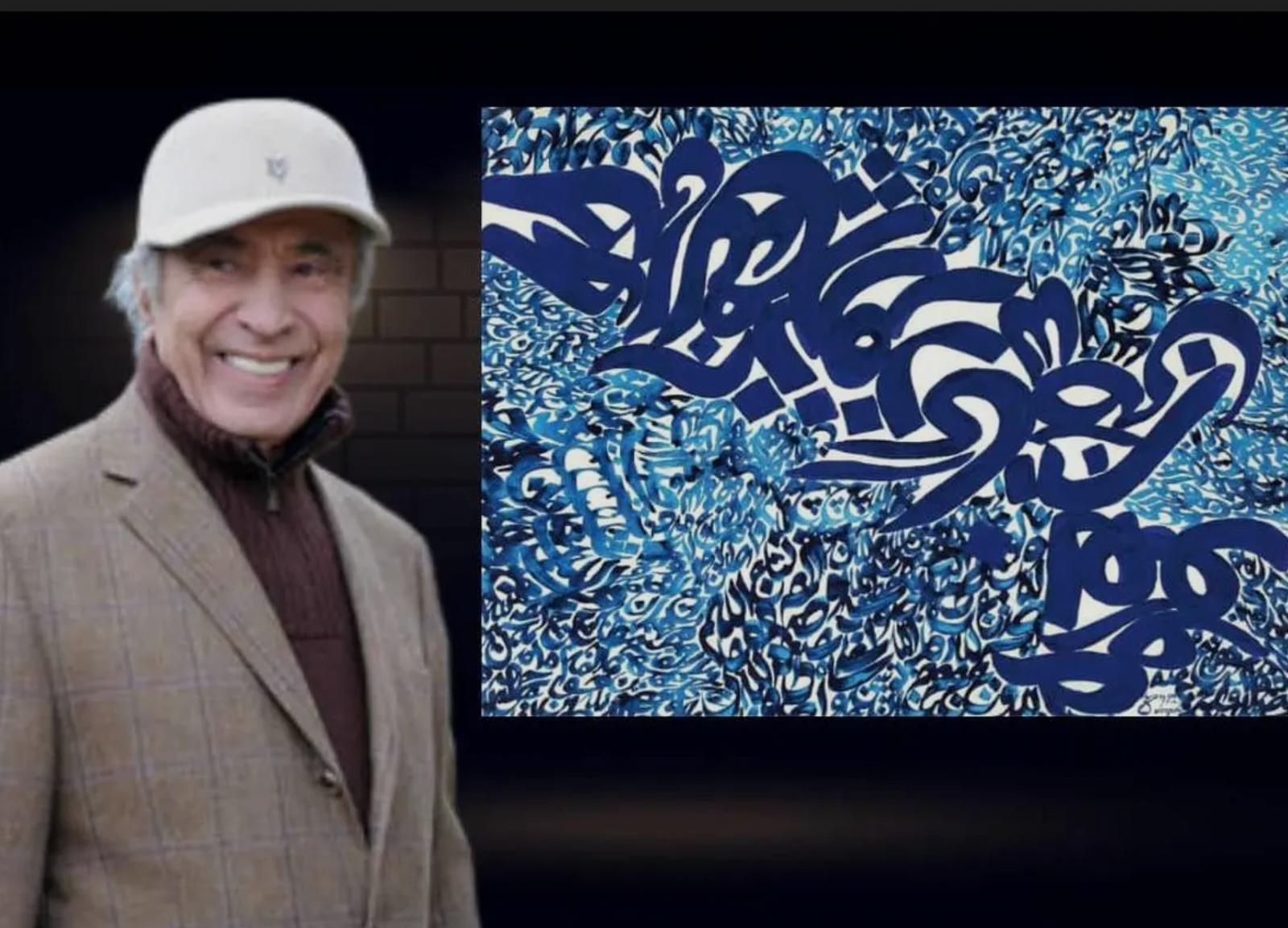
Hossein Zenderoudi
Numeration as Cultural Memory
Hossein Zenderoudi transformed everyday religious symbols, numbers, and calligraphic fragments into a modern visual language that helped define Iran’s Saqqakhaneh movement and reshape the relationship between heritage and abstraction
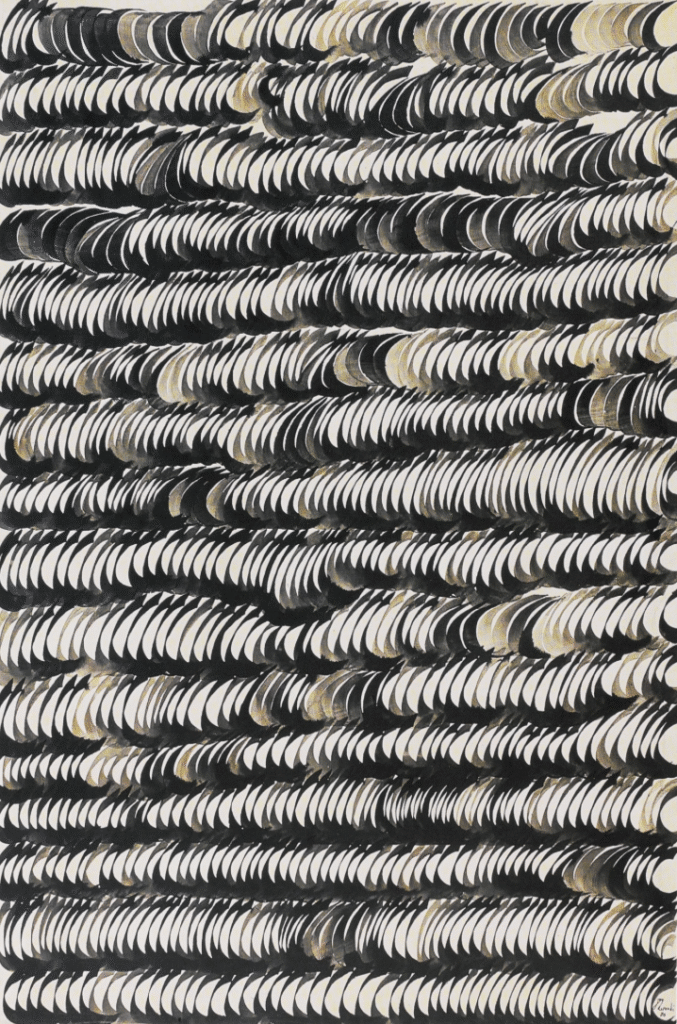
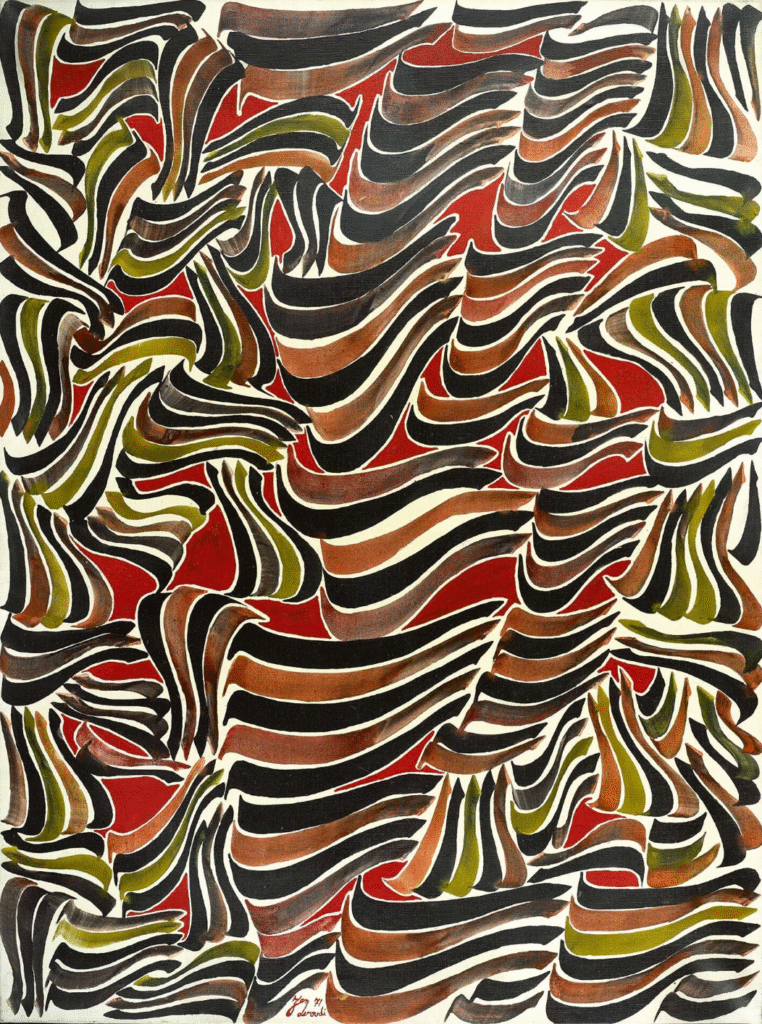
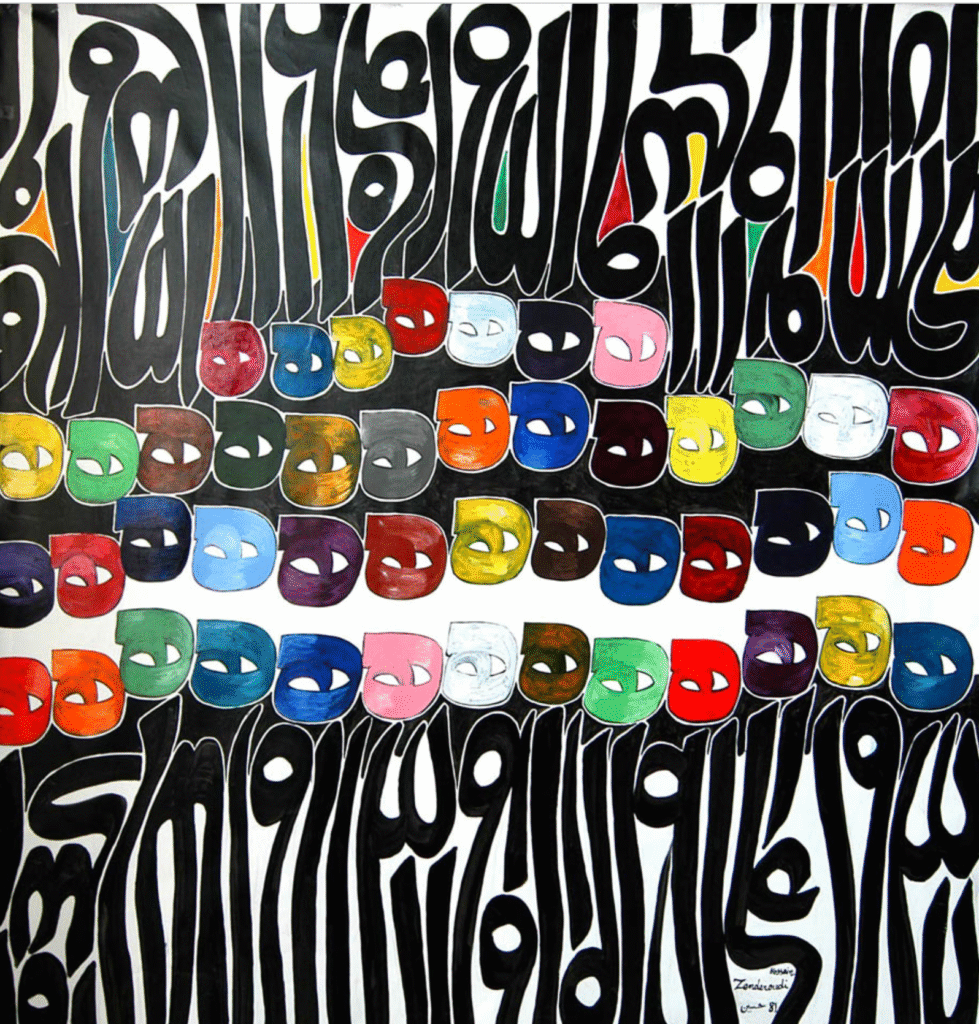
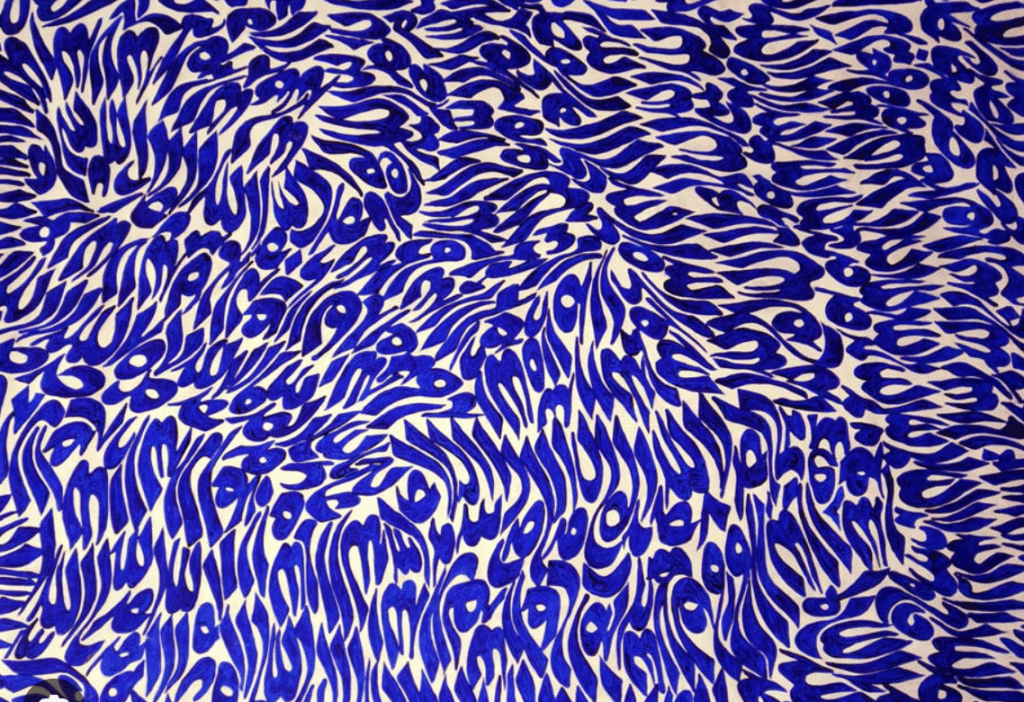
- Zenderoudi was a founding figure of the Saqqakhaneh movement, integrating Iranian devotional and popular visual culture into modern art.
- He developed a distinctive practice based on numbers, talismanic symbols, and repeated signs, producing dense pictorial environments structured as visual systems.
- His work demonstrated that local symbolic traditions could enter global modernism while preserving cultural meaning and symbolic logic.
Tehran, 1937. Hossein Zenderoudi was born into a society negotiating rapid modernization while remaining deeply connected to religious and vernacular visual traditions. His early education at the Tehran School of Fine Arts introduced him to Western academic painting, yet his most formative encounters occurred beyond institutional settings — in shrines, marketplaces, prayer books, and the talismanic imagery circulating through everyday Iranian life.
He recognized that the academy could teach technique yet he prefered memory.
By the late 1950s, Zenderoudi became part of a generation of Iranian artists searching for alternatives to imported models of modernism. This search gave rise to what critics later named the Saqqakhaneh movement, a Neo-Traditionalist formation that reinterpreted devotional objects, calligraphic fragments, and popular symbolic forms as contemporary artistic material. Named after public water shrines embedded in Iranian urban space, Saqqakhaneh evoked a site where collective memory, ritual practice, and visual culture converged.
Within this context, Zenderoudi stopped painting objects. He began painting belief systems.
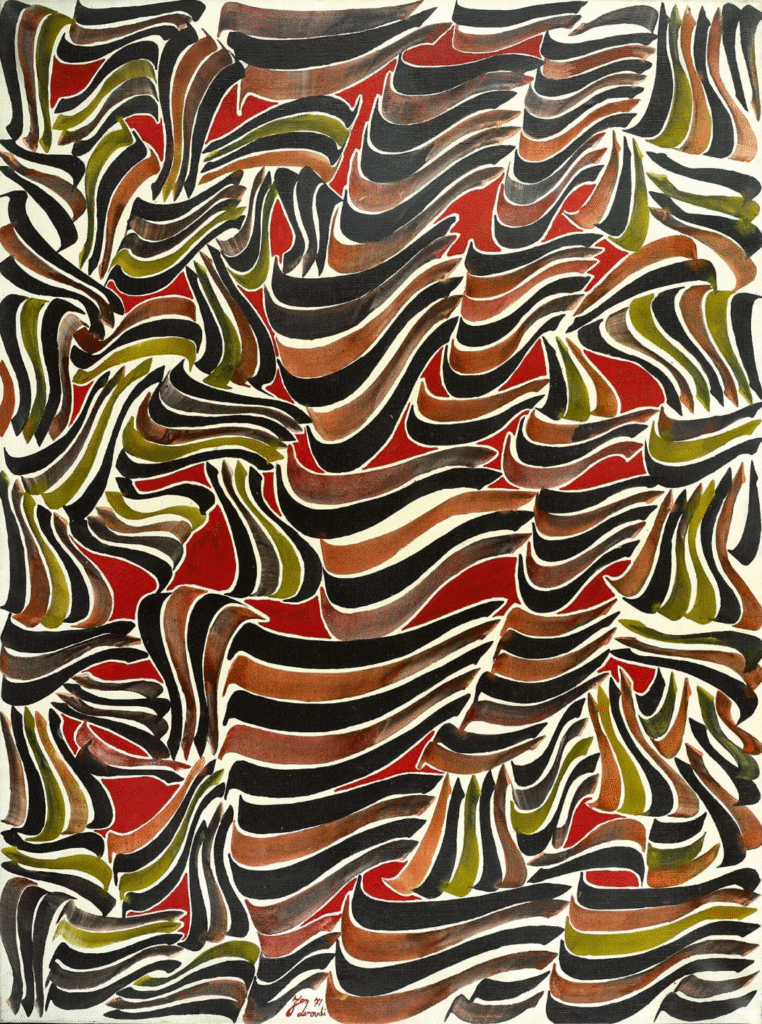
He extracted signs ,numbers, seals, fragments of script, and talismanic symbols then reorganized them into dense pictorial environments. These compositions functioned simultaneously as image, text, and pattern. Numerology became central to this process. Repeated digits and symbolic sequences echoed scripts historically inscribed on objects, garments, and architectural surfaces, while structured grids introduced a formal logic aligned with international abstraction.
For Zenderoudi, numbers were not decorative elements but carriers of beliefs.
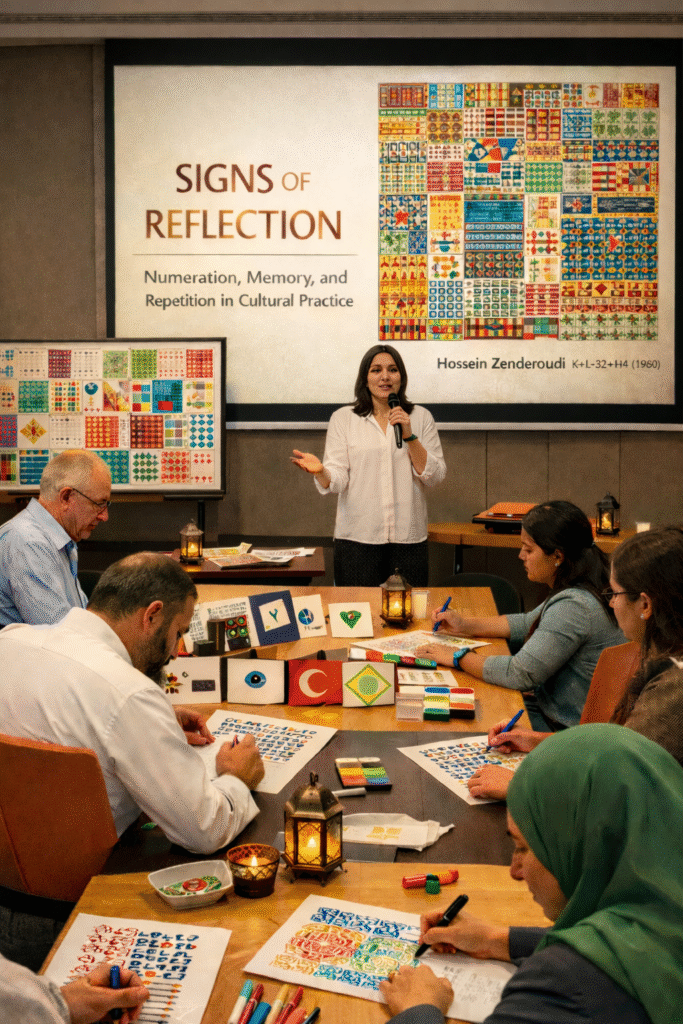
A key example of this synthesis is “K+L+32+H+4” (1960). The painting presents a complex surface structured by repeated digits, geometric partitions, and stylized calligraphic elements rendered in saturated tones. Its title operates as coded notation rather than description, reinforcing Zenderoudi’s movement toward symbolic systems. The composition resists linear interpretation. Instead, it functions as an optical and conceptual environment that invites sustained viewing. The work is significant because it demonstrates Zenderoudi’s methodological transition: cultural signs are not illustrated but reorganized as structural components of abstraction.
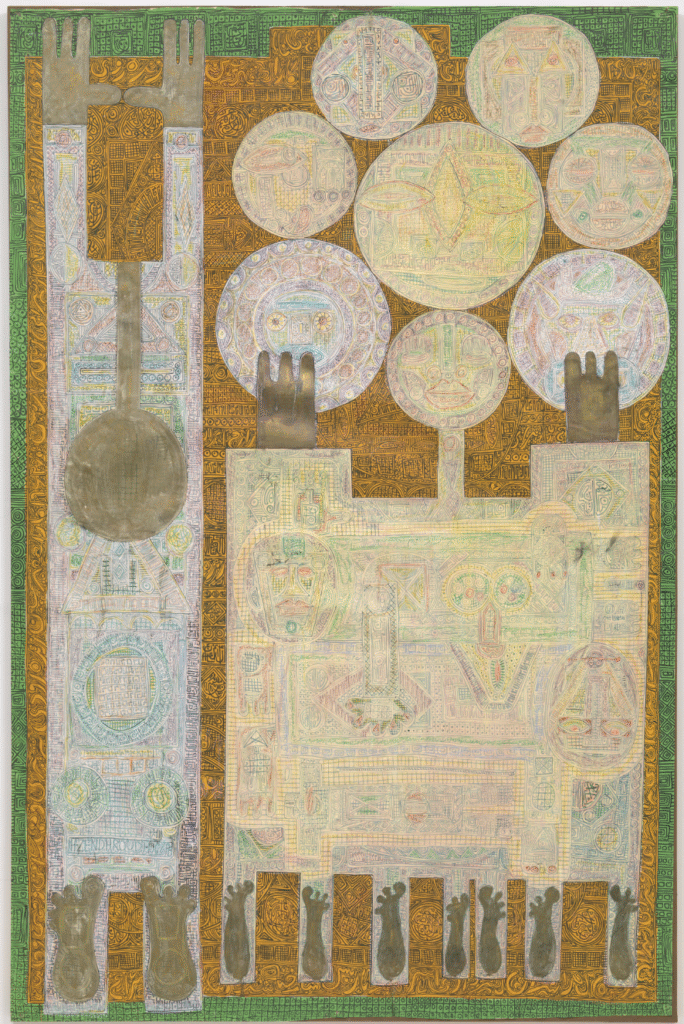
This approach intersected with broader artistic currents such as Hurufiyya, where artists explored the visual autonomy of script. While many Hurufiyya artists privileged the expressive form of letters, Zenderoudi extended the field to numeration, introducing a parallel symbolic language rooted in talismanic practice.
By the mid-1960s, exhibitions in Paris and participation in major biennials positioned Zenderoudi within international conversations on modernism and identity. His presence challenged assumptions that abstraction emerged solely from Western trajectories. Instead, his work showed that modern visual languages could arise through reinterpretation of indigenous symbolic economies.
Today, Zenderoudi’s practice offers a strategic model of cultural continuity achieved through translation rather than preservation alone. For institutions engaging with heritage, his work demonstrates that vernacular systems , signs, rituals, numeration can retain relevance when reorganized within contemporary frameworks.
How can organizations translate cultural heritage into a collective experience?