

Youssef Ahmad
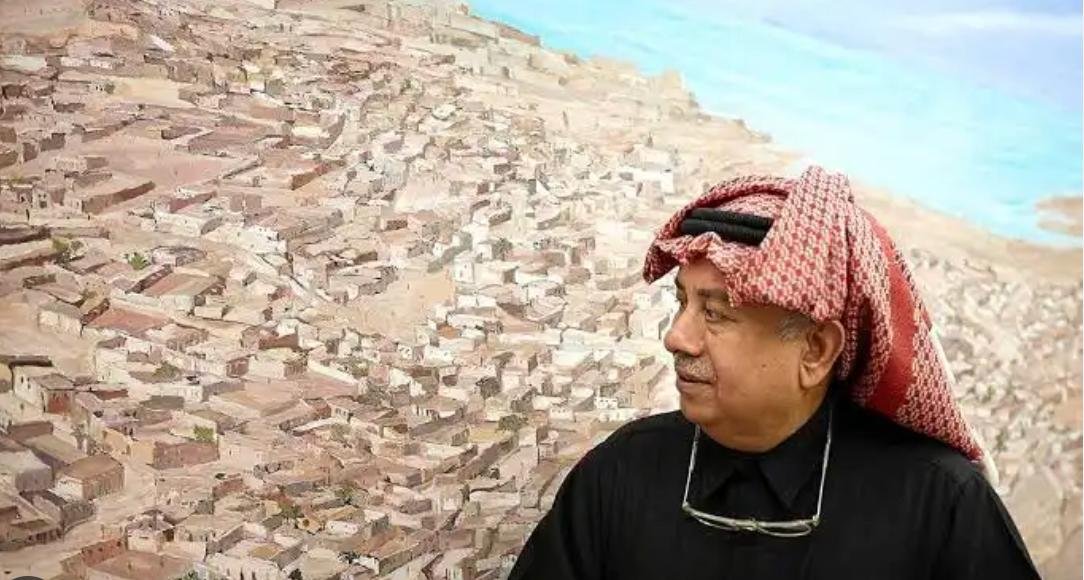
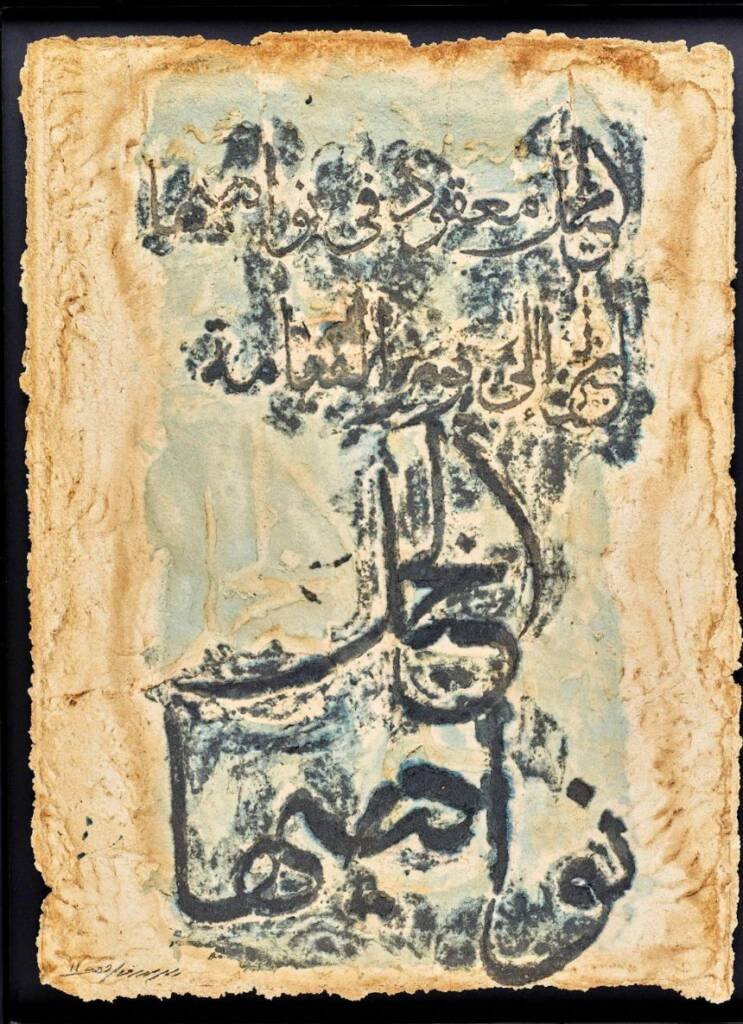
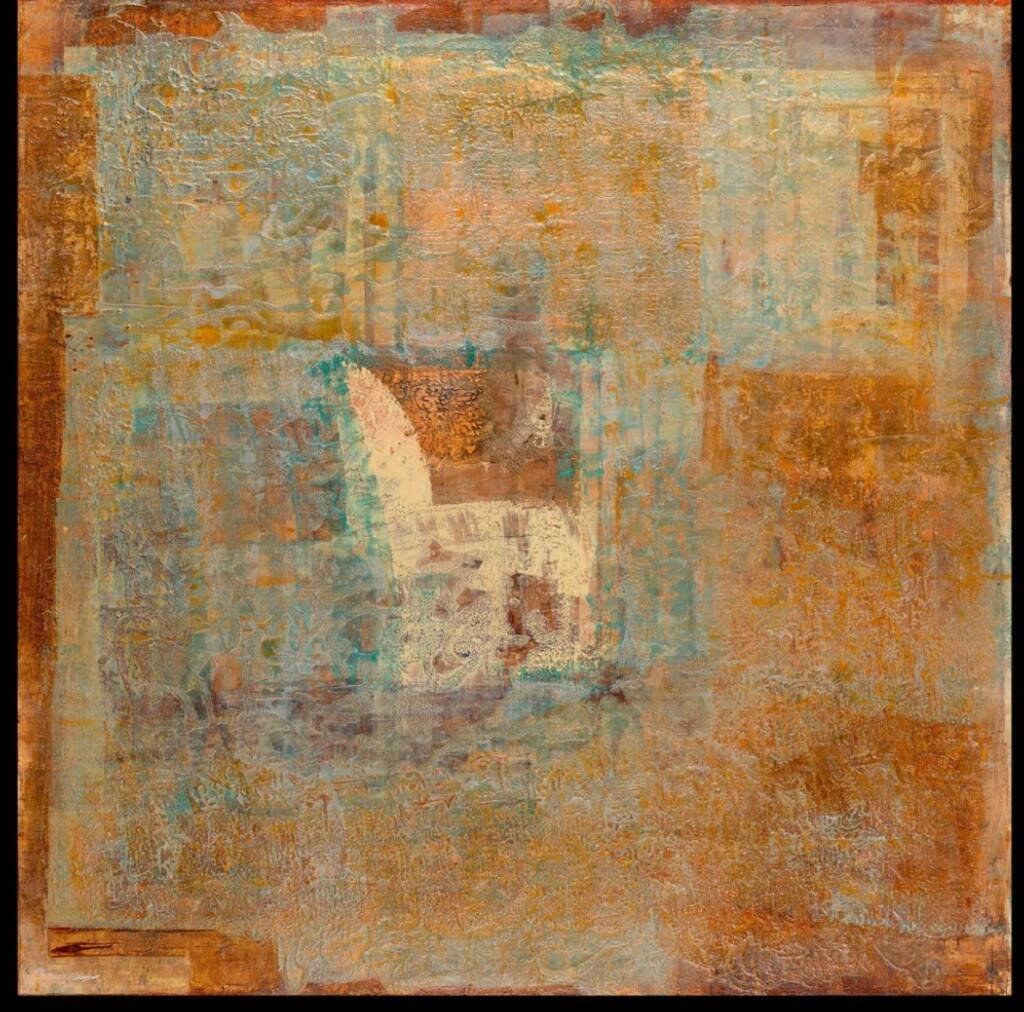
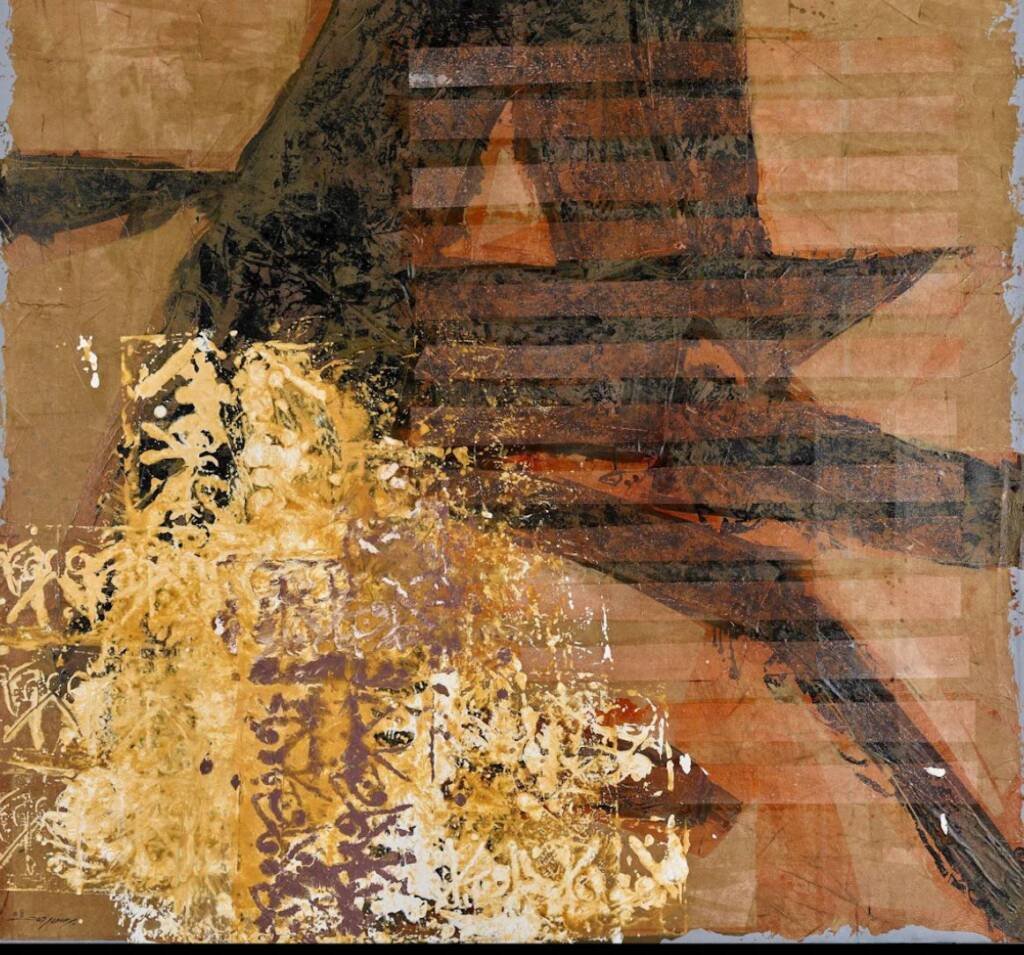
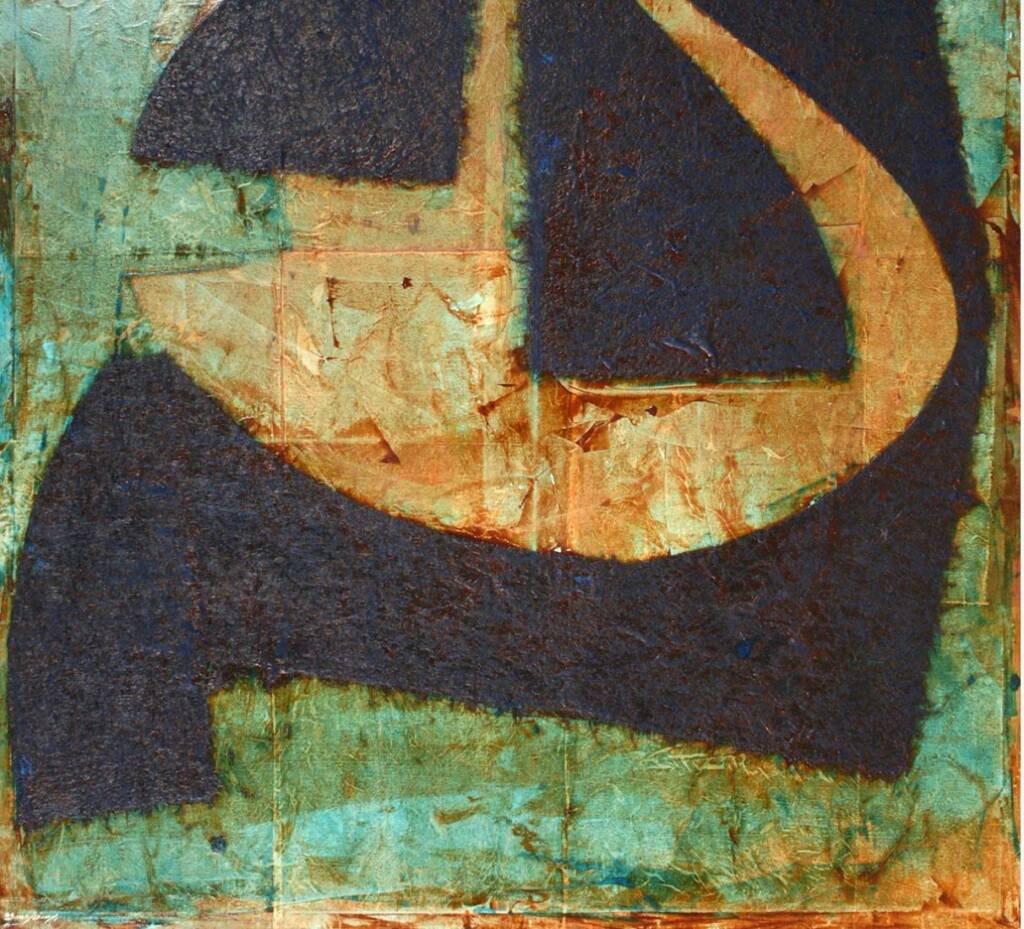
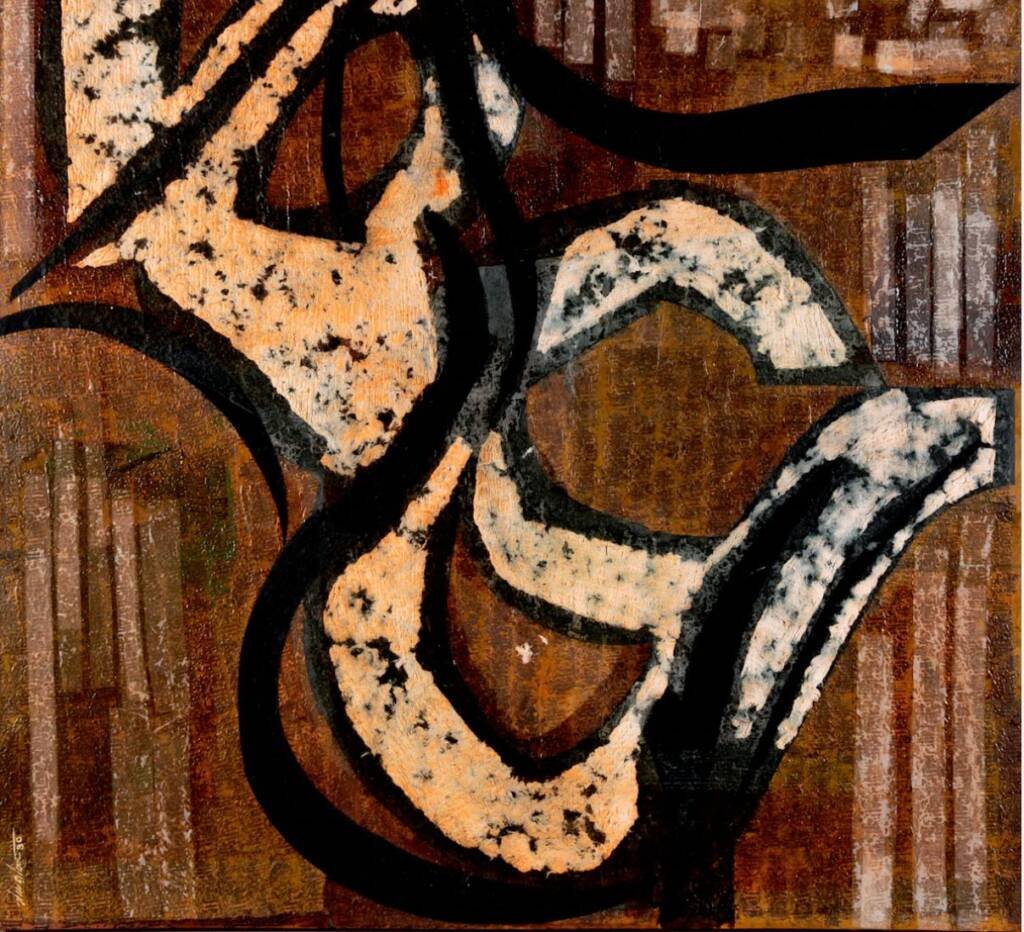
Yousef Ahmad transforms desert memory, palm-leaf paper, and Arabic script into a singular modern Qatari abstraction.
- He established a Qatari modern-art identity rooted in indigenous materials and calligraphic abstraction.
- He bridged the local and the global, studying abroad and returning to pioneer the first solo hurufiyya exhibition in Doha.
- His mature work reinvents Arabic letters and Gulf artisanal substrates (palm-leaf, handmade paper), anchoring heritage in contemporary form.
Born in 1955 in the Al Jasrah district of Doha, Yousef Ahmad’s origins sit at the nexus of traditional Qatari life and the early phases of modernisation. As a child, he witnessed the shifting urban landscape, saw the mechanised change, and absorbed his community’s craft and culture. That early environment became the foundation of his aesthetic.
His formal education was at Helwan University in Cairo, where he earned a BA in Fine Arts and Education in 1976, under the mentorship of distinguished Egyptian artists. He then advanced his practice at Mills College in California (MFA, 1982), exposing him to global modernist idioms and abstraction.
The transformation occurs when he returns to Qatar:
rather than replicate Western modes, he started selecting local materials, Arabic script, Gulf desert colour and reinvents his native language in visual form.
In one pivotal moment around 1977, Ahmad held the first solo exhibition dedicated to hurufiyya style in Doha. From this point, his practice shifts: Arabic letters cease to serve as mere motifs and become structural, spatial, expressive elements.
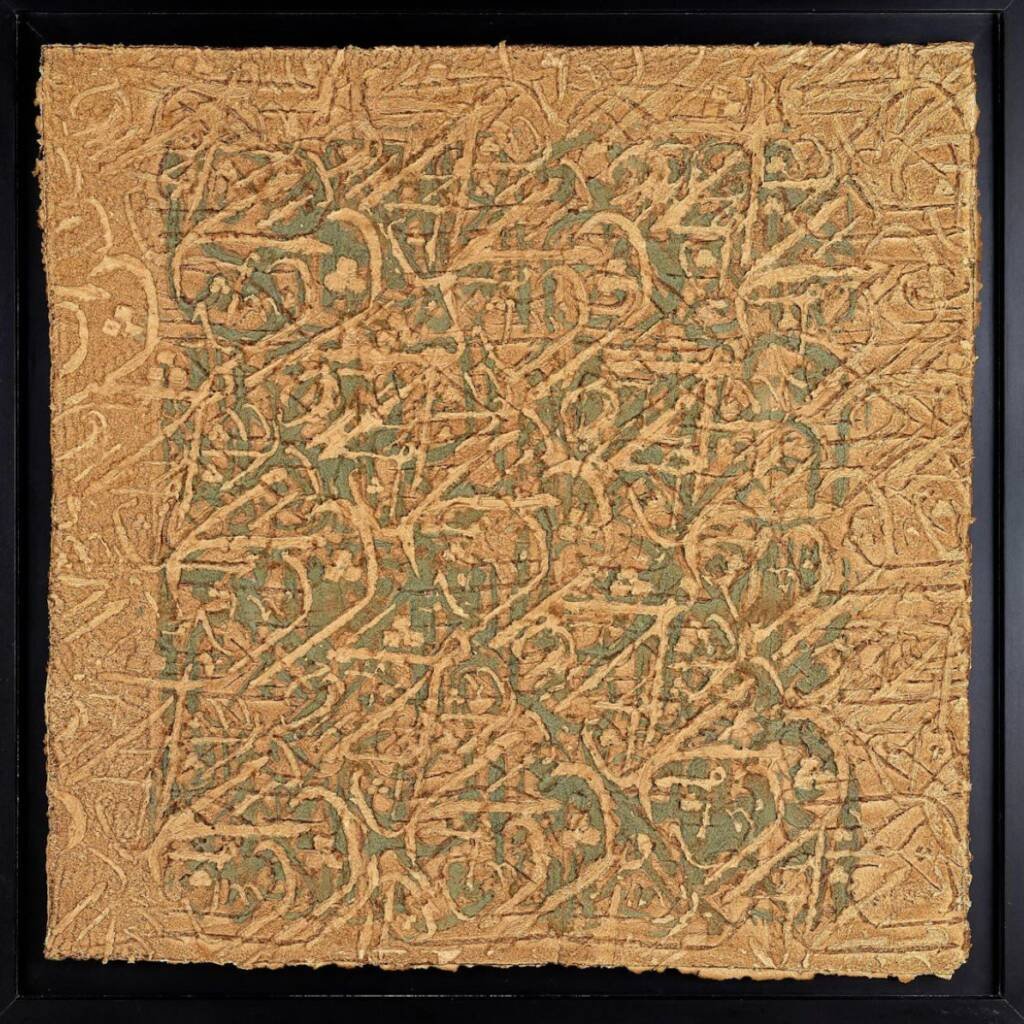
One key work that illustrates this is his 2011 triptych – The Birth of Innovation (mixed media on palm-leaf paper, 200 × 200 cm per panel) held by Mathaf : Arab Museum of Modern Art
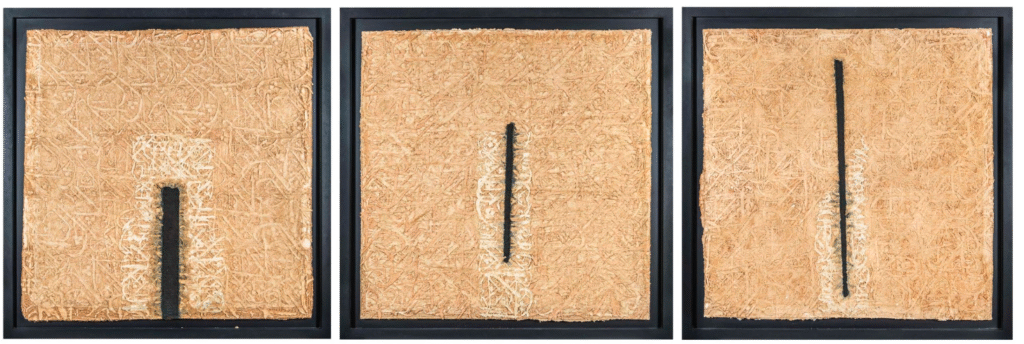
In this work, the layered repetition of calligraphic forms, formed of palm-leaf substrates, articulates a dialogue between place (Gulf desert, Crafts tradition) and abstraction (modern art language). The result is both personal and universal.
Contextually, Ahmad’s work sits at the intersection of the hurufiyya movement and Gulf modernism. He shares with Arab artists of the 1970s and 1980s a desire to reclaim Arabic script and indigenous materials within a global art conversation. Yet his specificity — his use of palm-leaf paper, his references to Gulf-specific landscapes and forms— positions him distinctly within the Qatar-Gulf context.
Yousef Ahmad’s work demands that we look at the Gulf not as a blank canvas imported by modernism, but as a terrain rich with materials, scripts, and memory. Ahmad’s oeuvre stands as an exemplar: where Arabic script becomes architecture, and the desert’s memory enters modern form.