

Parviz Tanavoli (Iran, b. 1937)
Defined modern Iranian sculpture, bridging calligraphy, tradition, & contemporary form.
- Born in Tehran in 1937; studied sculpture in Iran and Italy
- Co-founder of the Saqqakhaneh movement in the 1960s
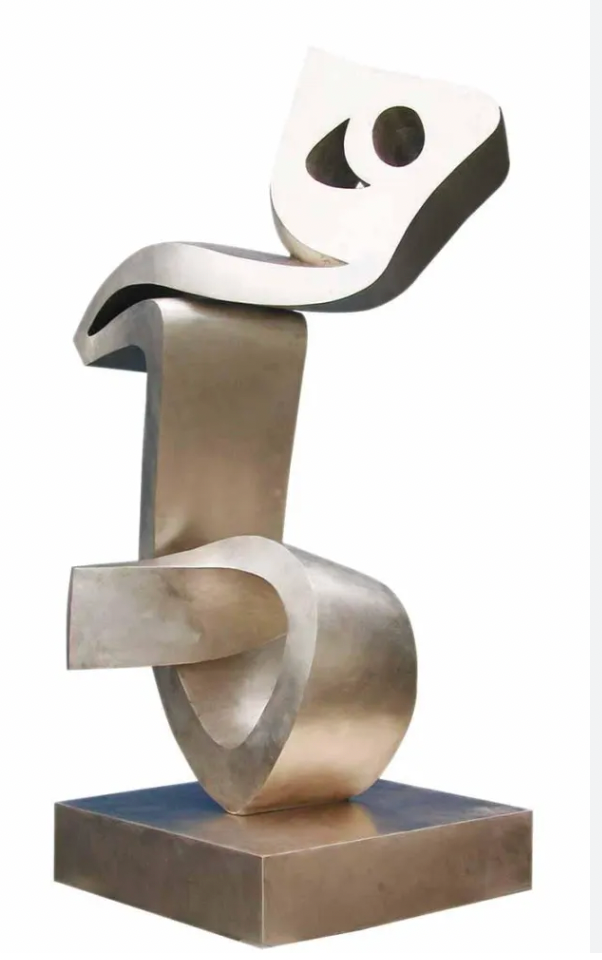
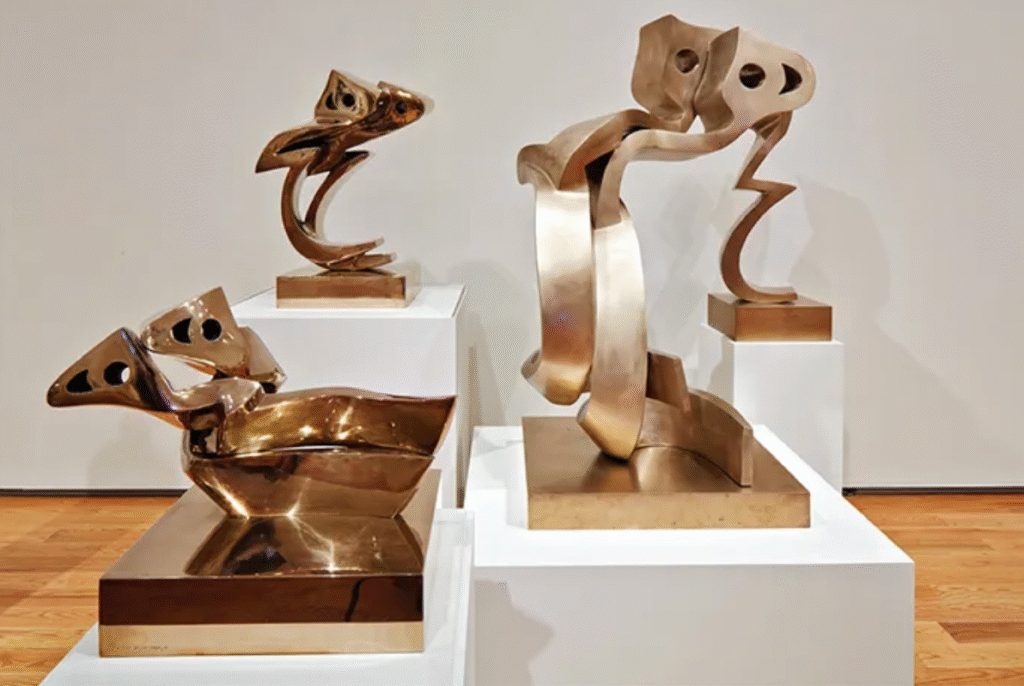
- Best known for his “Heech” sculptures – the word “nothing” reimagined as art
Parviz Tanavoli was born in Tehran in 1937. He studied sculpture at the Tehran School of Fine Arts and later at the Brera Academy in Milan, Italy. Returning to Iran in the early 1960s, he brought with him modern sculptural techniques but grounded them in Iranian cultural references.
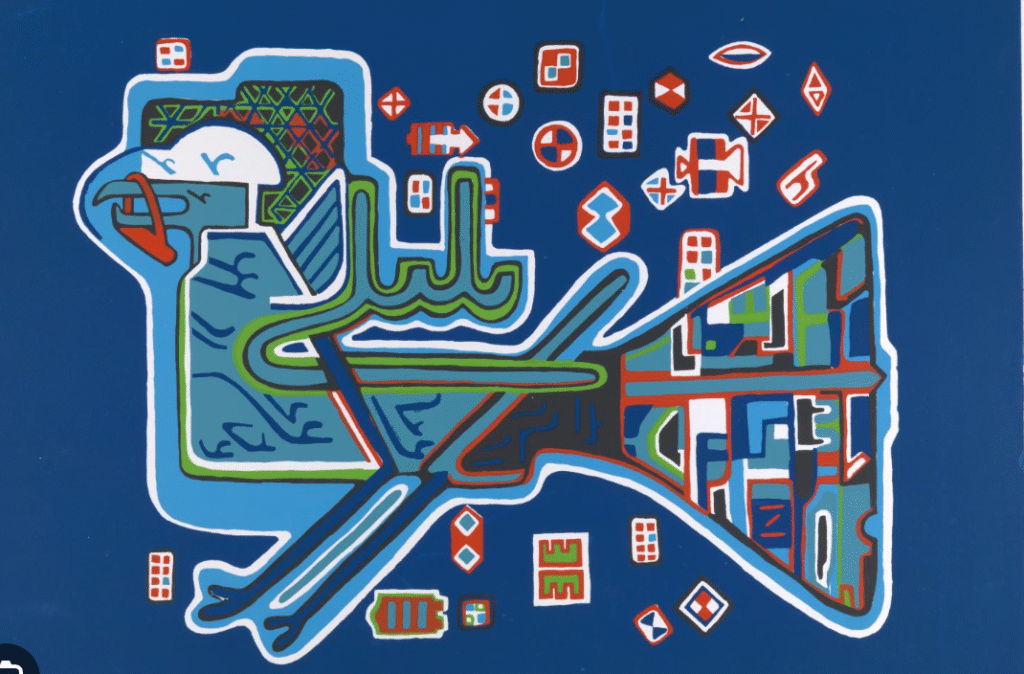
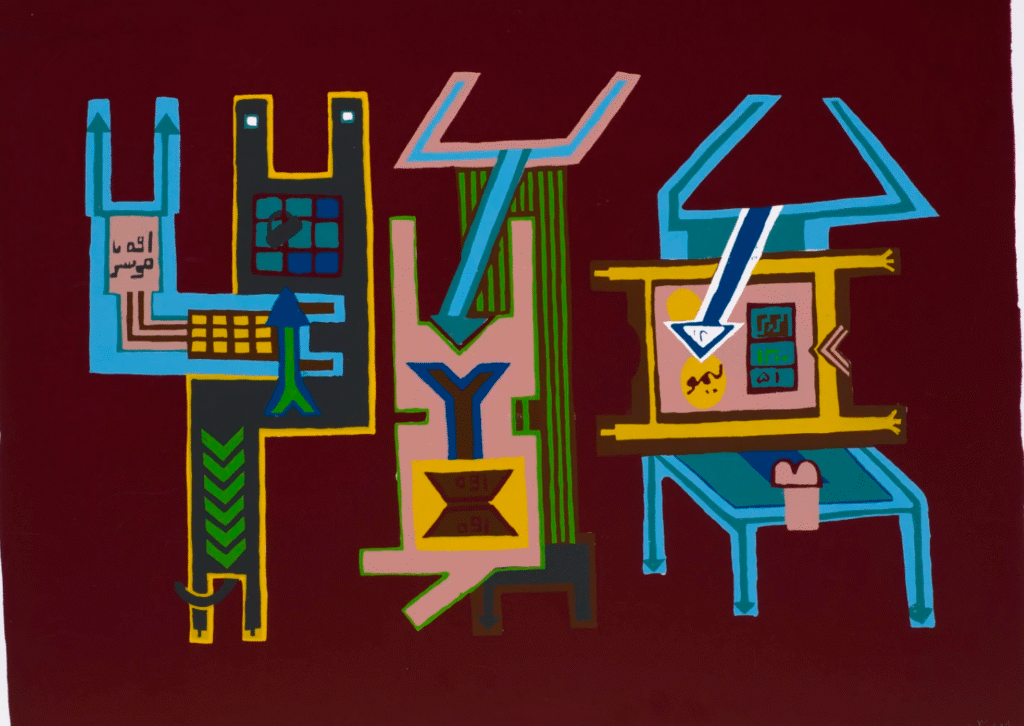
Tanavoli became a central figure in the Saqqakhaneh movement, which sought to build a distinctly Iranian modern art language. Inspired by the decorated public water fountains known as saqqakhanehs, the movement reinterpreted folk symbols, Shi’a iconography, and Persian calligraphy within modern compositions.
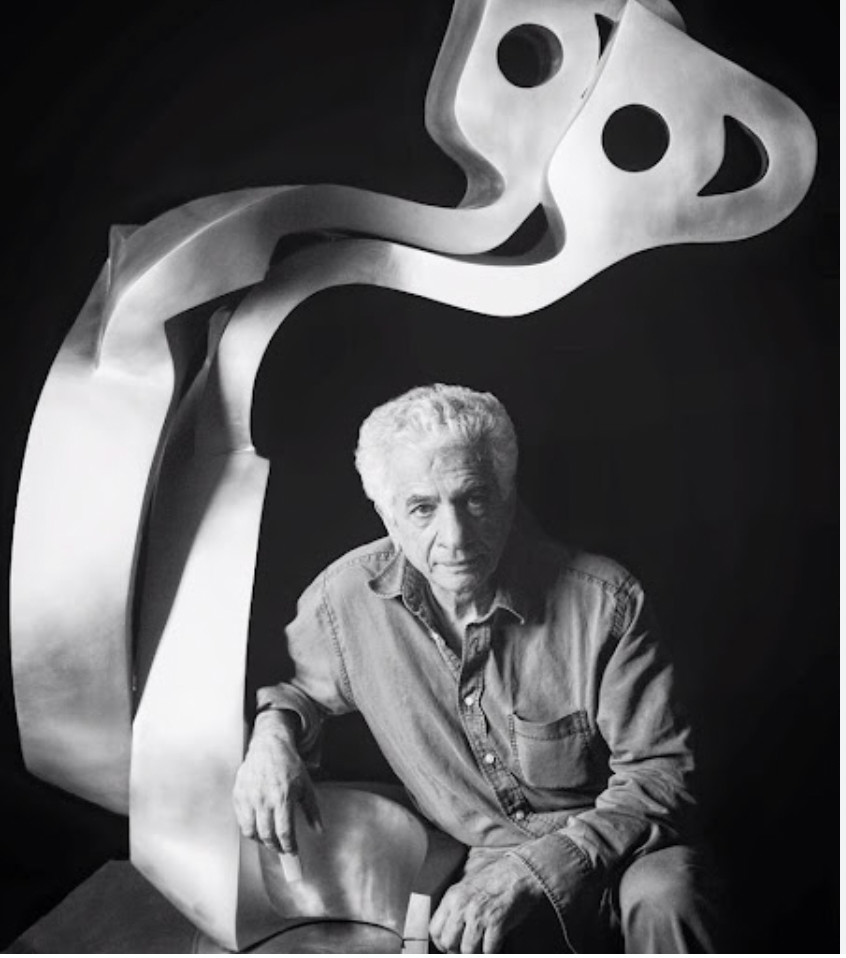
His most iconic work is the “Heech” series. Beginning in 1965.
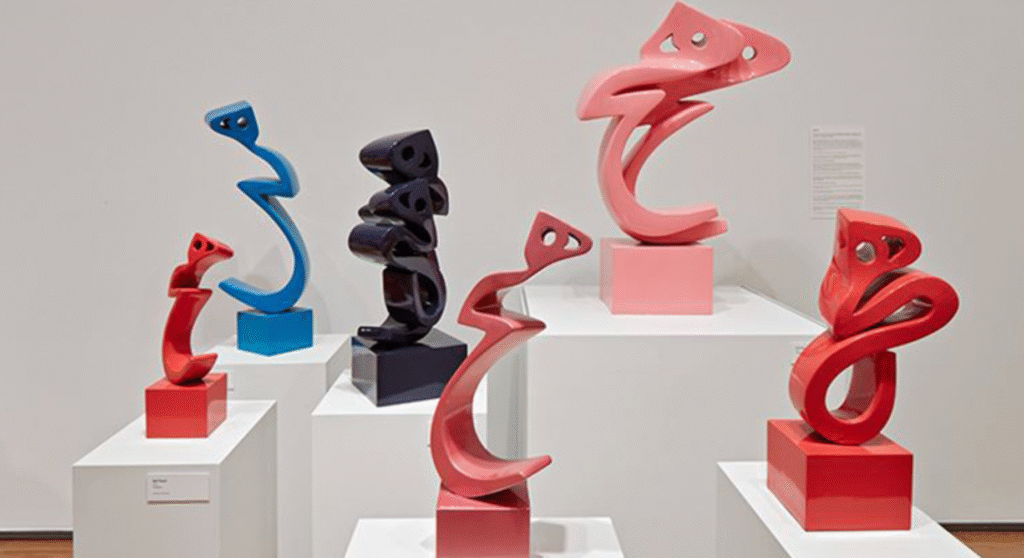
Tanavoli sculpted the Persian word heech (هیچ), meaning “nothing,” into abstracted forms. Cast in bronze, built into chairs, or transformed into large-scale structures, Heech became both a visual and philosophical statement. It reflected Persian Sufi traditions that meditate on “nothingness,” while also addressing modern existential concerns.
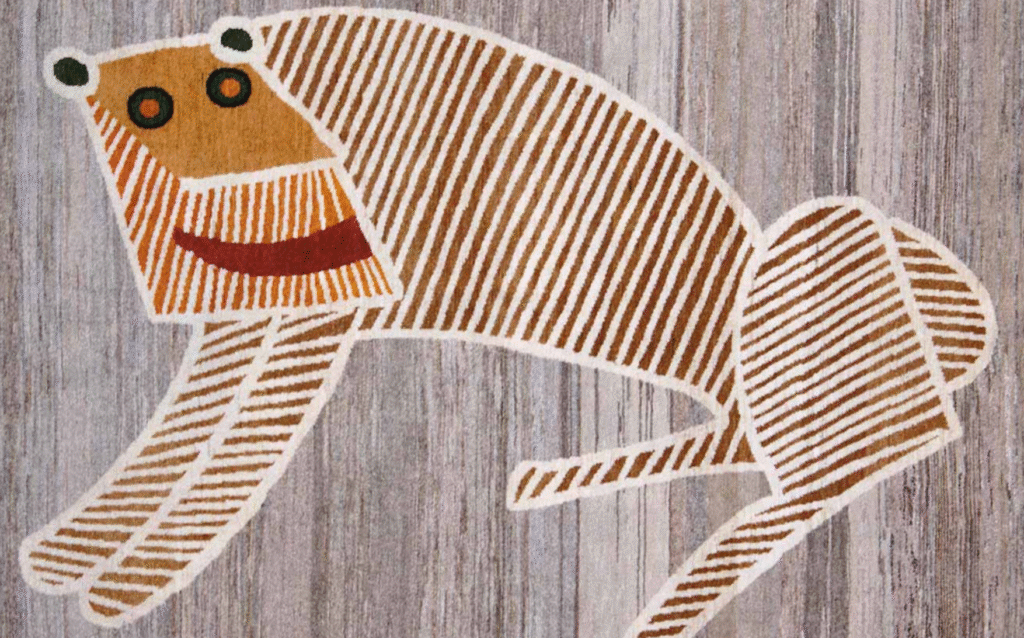
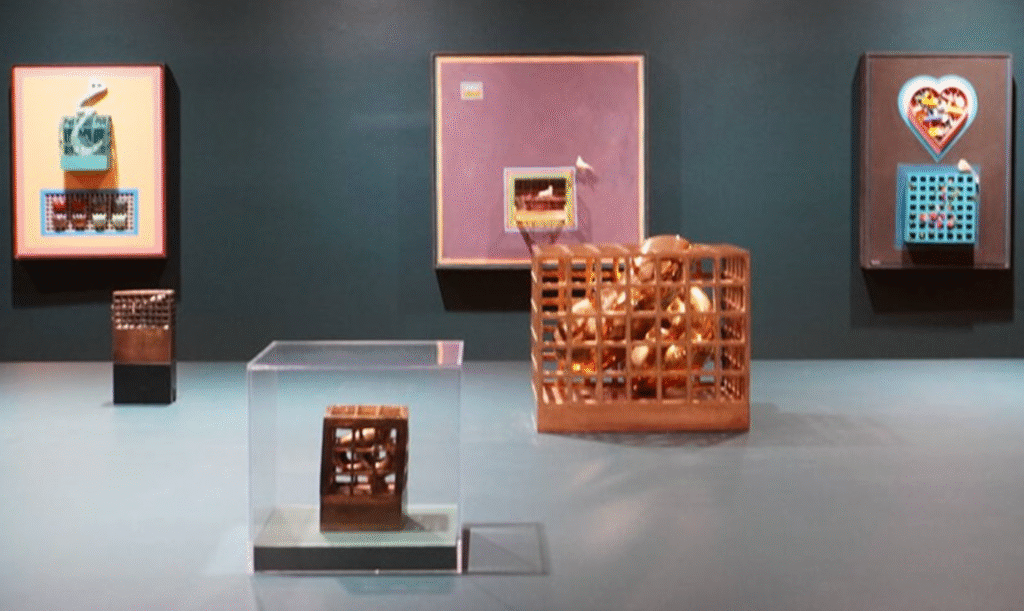
Beyond Heech, Tanavoli explored locks, cages, and architectural motifs. His works reference Persian craft traditions but elevate them into modernist idioms. Through this synthesis, Tanavoli positioned Iranian sculpture within the global narrative of modern art without losing its cultural specificity.
His career spans international exhibitions, teaching, and a role as a cultural bridge. Today, his works are held in major collections worldwide, including the British Museum and the Metropolitan Museum of Art.
Tanavoli’s legacy lies in proving that Iranian art could modernize on its own terms. By reworking cultural symbols into new forms, he created a language that was both globally relevant and authentically Iranian.