

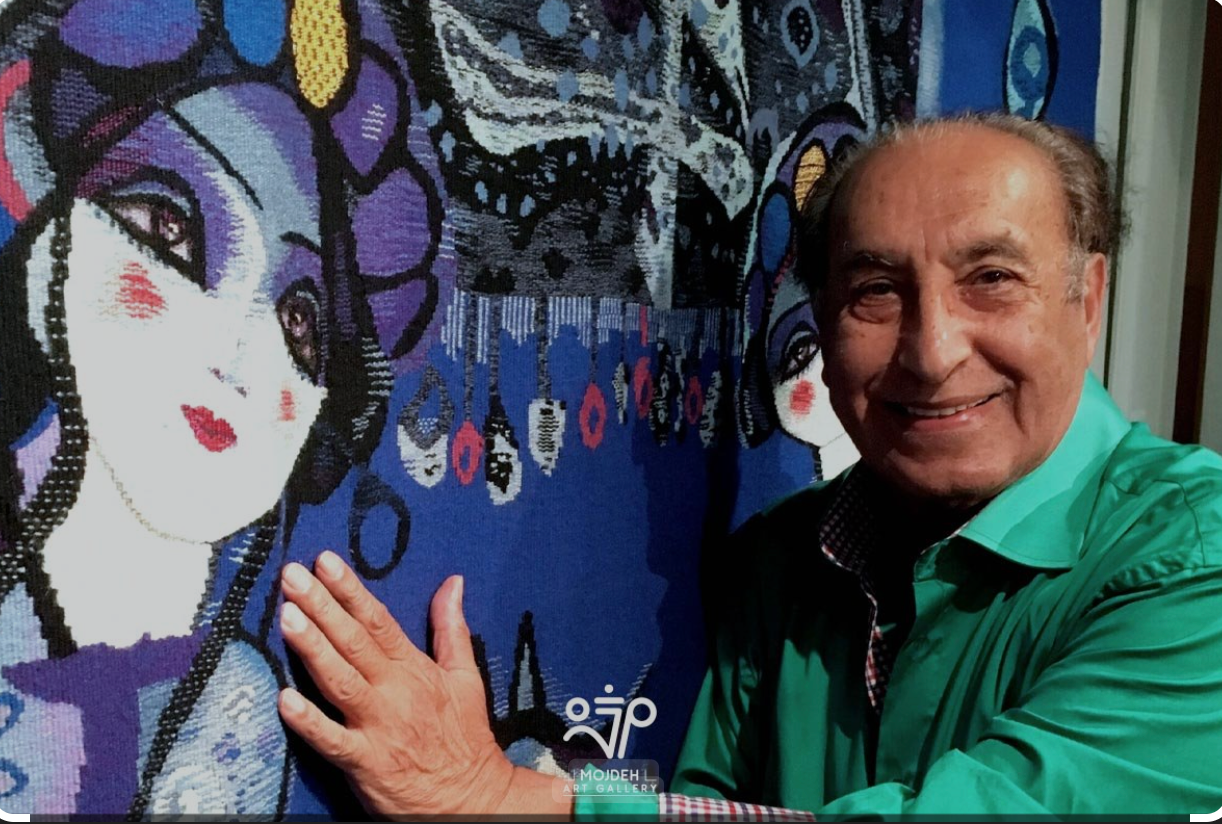
Nasser Ovissi (Iran, b. 1934)
He carried Iran’s visual memory into modern art
- Studied law and political science before art, then trained in Rome.
- A significant name in the Saqqakhaneh / Neo-Traditionalist movement
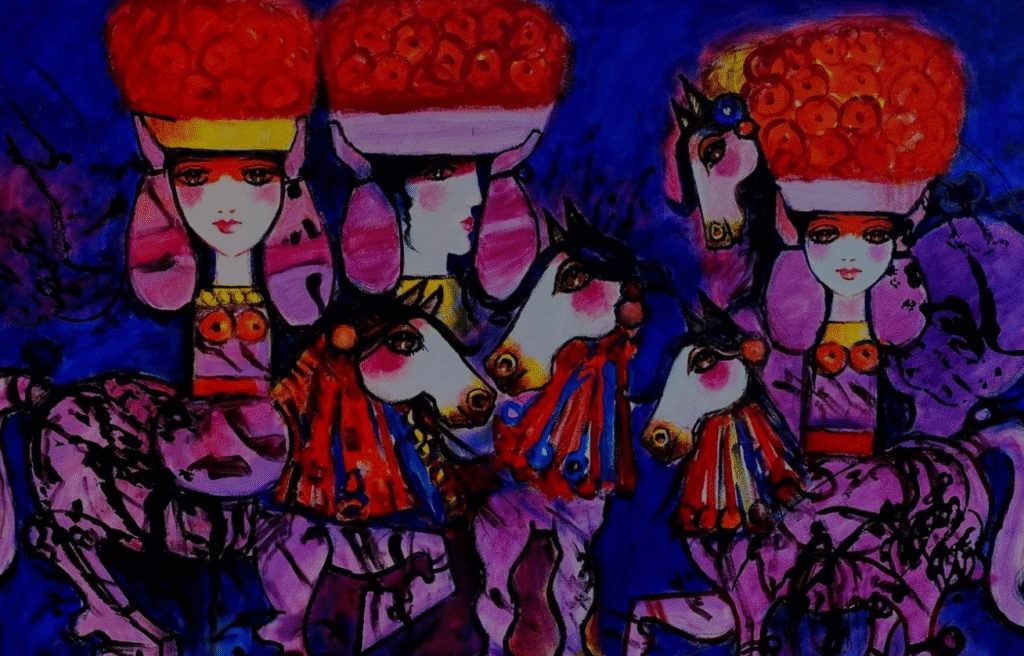
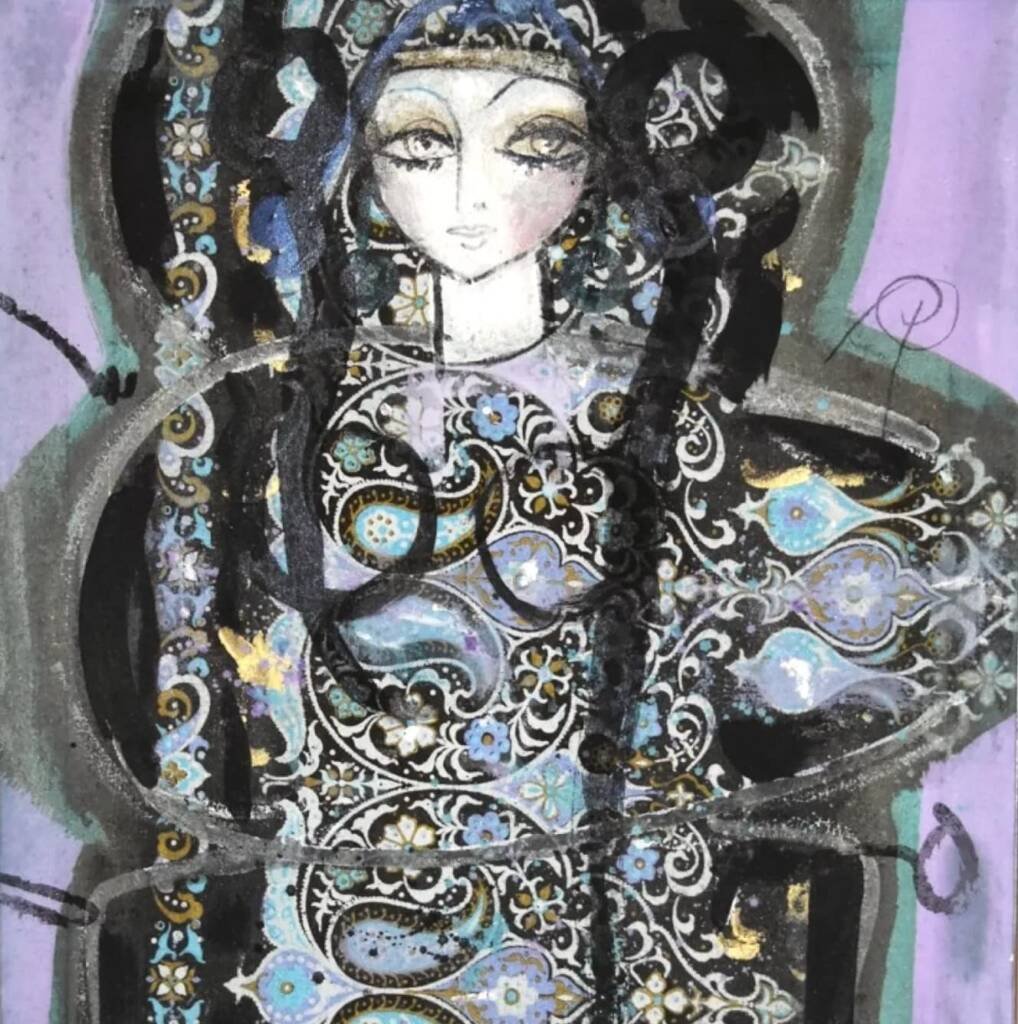
- Known for stylized women, horses, calligraphic rhythms, and combining East and West
Nasser Ovissi was born in Tehran in 1934. He first studied Law and Political Science at the University of Tehran, graduating in 1956.
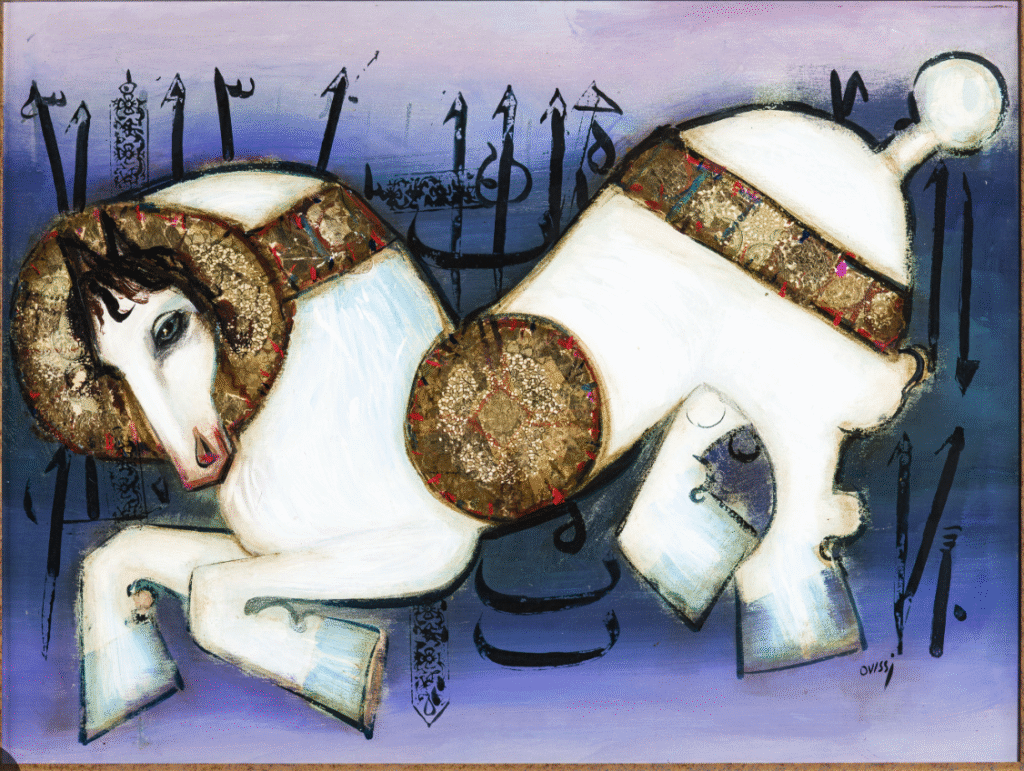
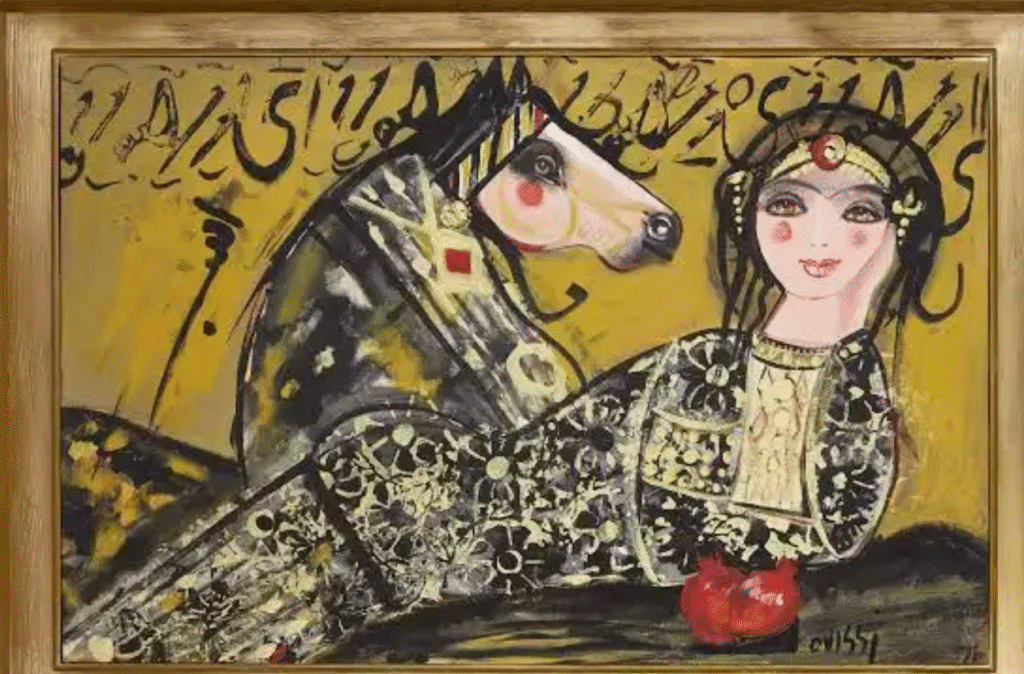
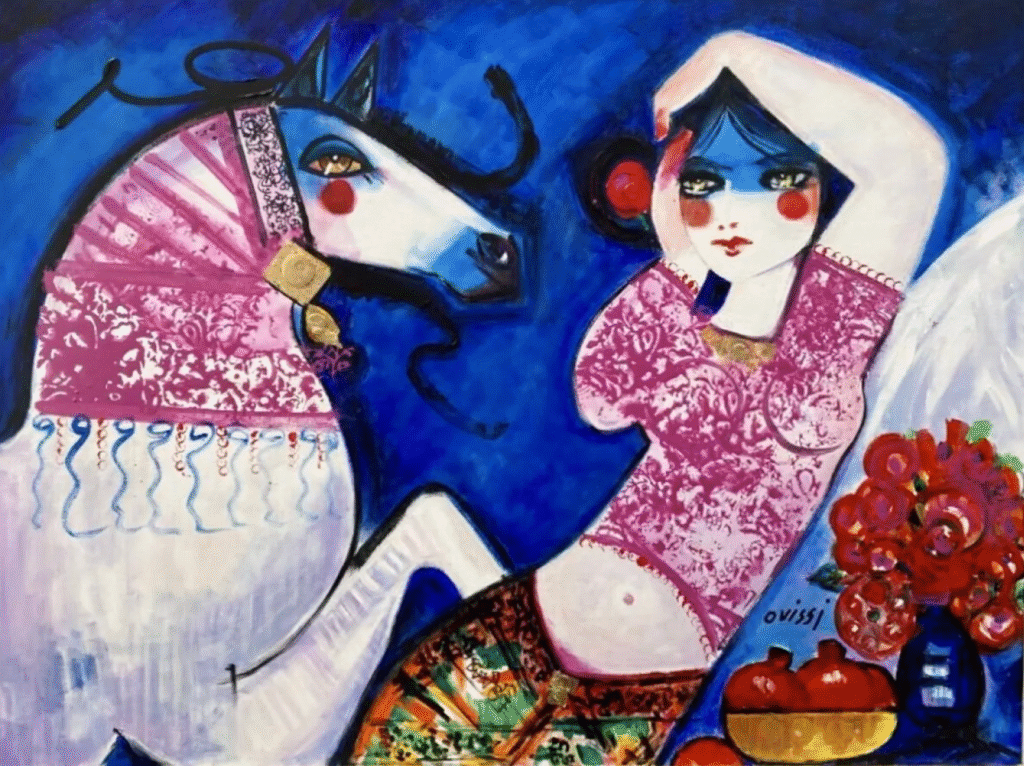
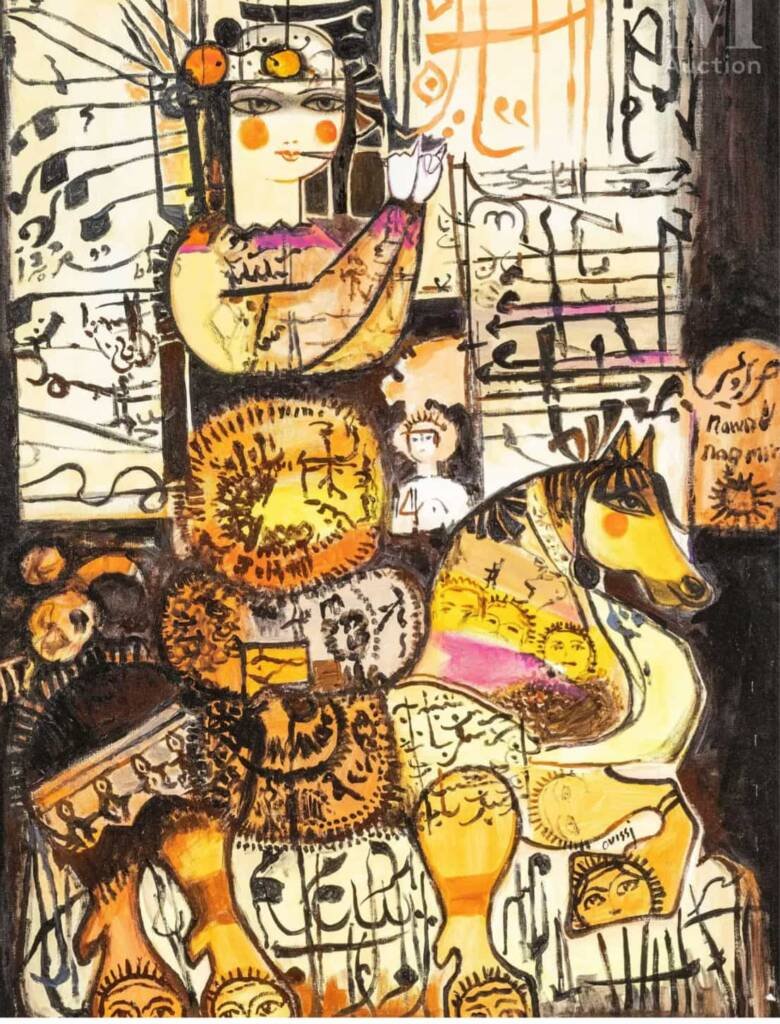
Soon after, he turned to art and continued his studies in Rome at the Accademia di Belle Arti (Beaux-Arts), where he merged Persian aesthetics with Western techniques. He is associated with the Saqqakhaneh movement, a school of Iranian modern art in the 1950s–60s that reimagined folk, religious, and decorative imagery in a modern form. Ovissi drew motifs such as horses, women, pomegranates, and calligraphy, layered, symbolic, and abstract.
During his career, he also held diplomatic roles in Rome and Madrid, positions that gave him access to international art circles and helped him promote Iranian art abroad. After the 1979 Iranian Revolution, Ovissi permanently moved abroad, eventually settling in the United States.
One of his signature works, “Green Horse”, exemplifies how he uses symbolic imagery (the horse) combined with his modern aesthetic.
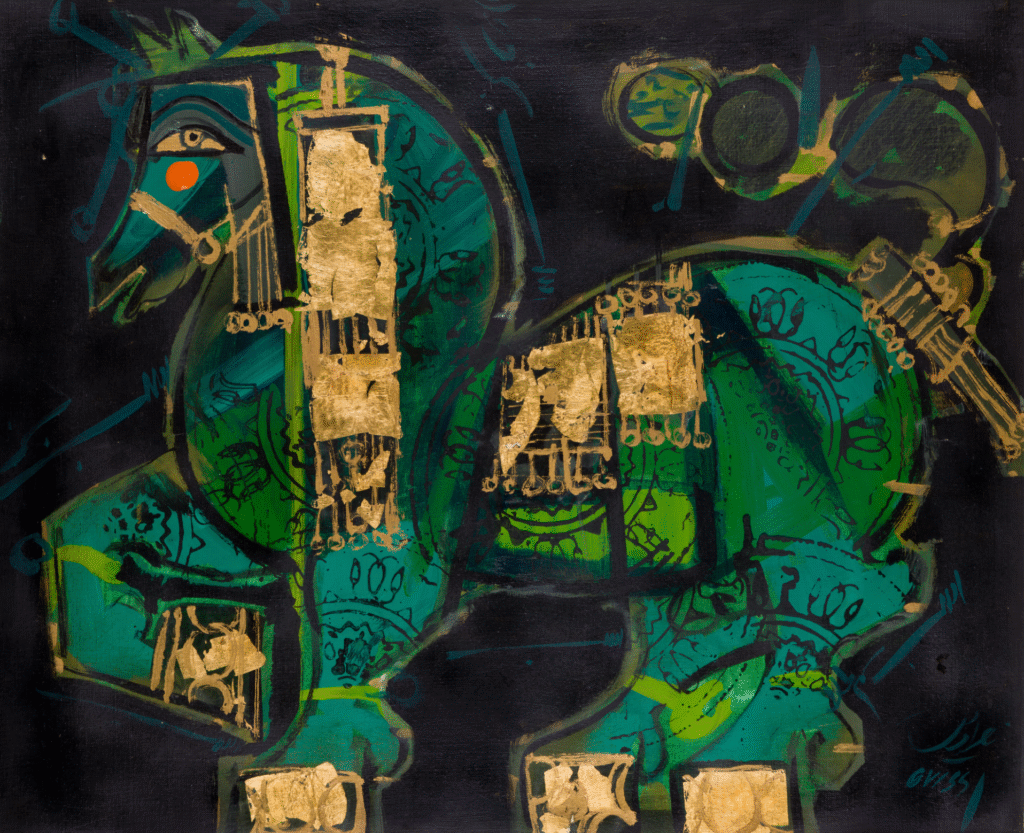
In that painting, the horse is not naturalistic. it’s a silhouette suffused with flat color and a meditative stillness. The form stands out more than the detail.
In many of his paintings, women appear as stoic figures. They are powerful presences, often paired with horses as metaphors for strength, heritage, or spiritual presence. He repeats Arabic-Persian script, not always for literal reading, but as a visual rhythm where the letters become part of the texture.
Ovissi’s work matters because it shows that modernity and tradition can coexist in a conversation.
He reminds us that heritage is a tool, not a cage.
About the Saqqakhaneh Movement:
In the decades following the 1950s, a generation of Iranian artists sought to bridge the gap between heritage and modernity. This impulse gave rise to what is now called the Saqqakhaneh school or movement. A neo‑traditional visual language rooted in religious, folk, and decorative symbols of Shi‘a Islam, but reframed with modern sensibilities.
The name “Saqqakhaneh” refers to public water fountains or shrines (saqqakhanehs) traditionally erected in Muslim neighborhoods, often decorated with votive inscriptions, symbolic imagery, and offerings. These structures had deep spiritual resonance in popular culture; artists of the movement used them as a metaphorical, symbolic point of departure.
Rather than rejecting Western modernism outright, Saqqakhaneh artists adapted it. They employed modern painting techniques such as abstraction, bold colors, and simplified form, while drawing on a repertoire of local motifs: calligraphy, talismans, zodiac signs, amulets, and Shi‘a iconography.
Over time, the movement gained international attention. Shows such as Iran Modern at Asia Society (2013) placed Saqqakhaneh at the heart of debates about how Iranian art converses globally while preserving local depths.