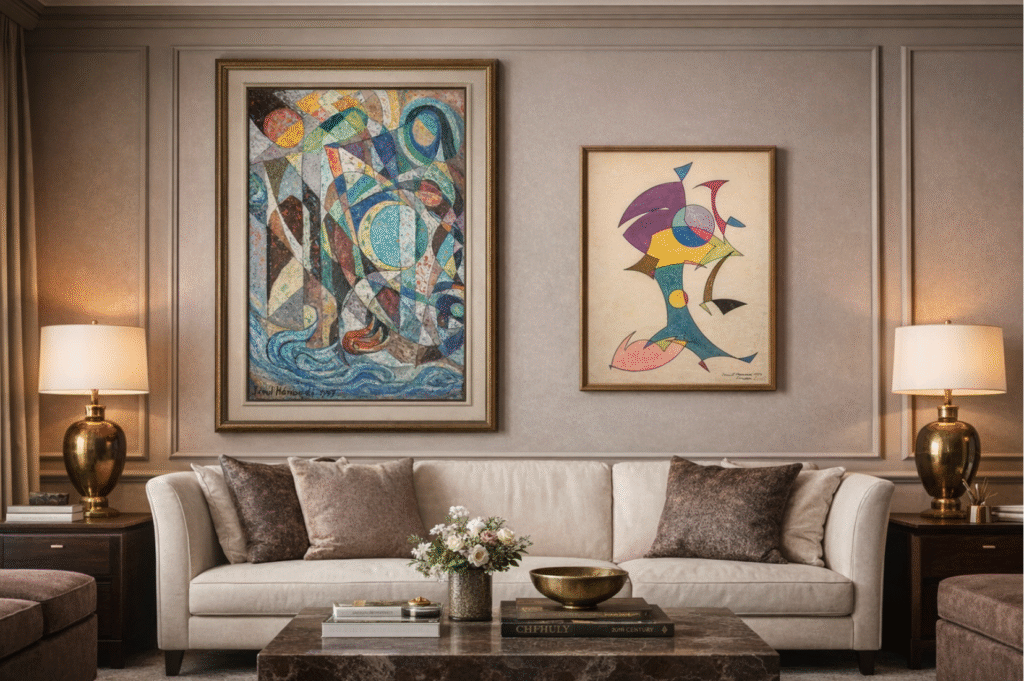

Jamil Hamoudi
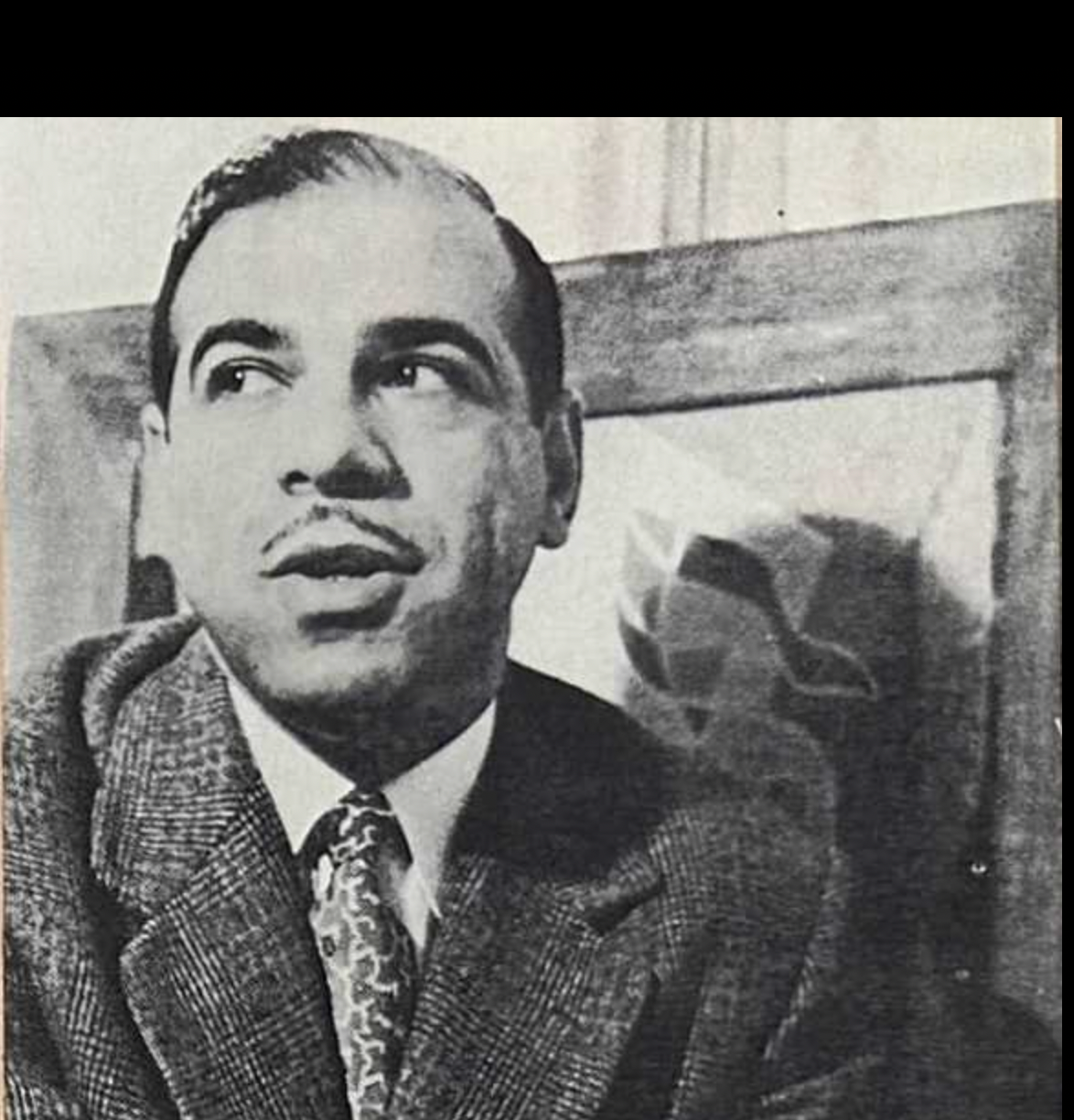
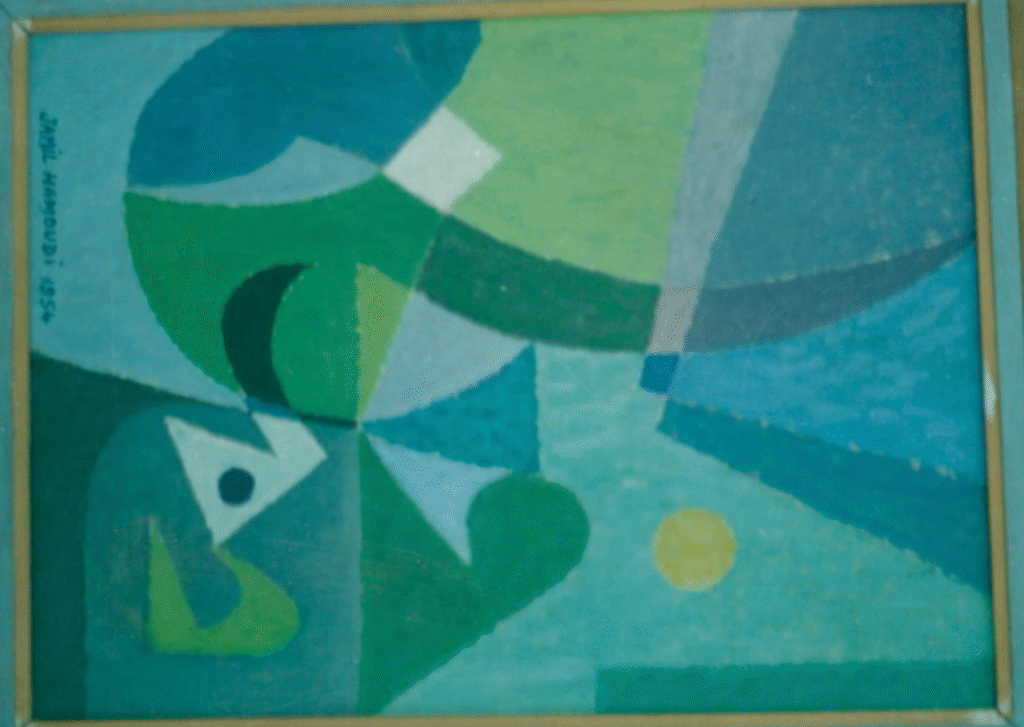
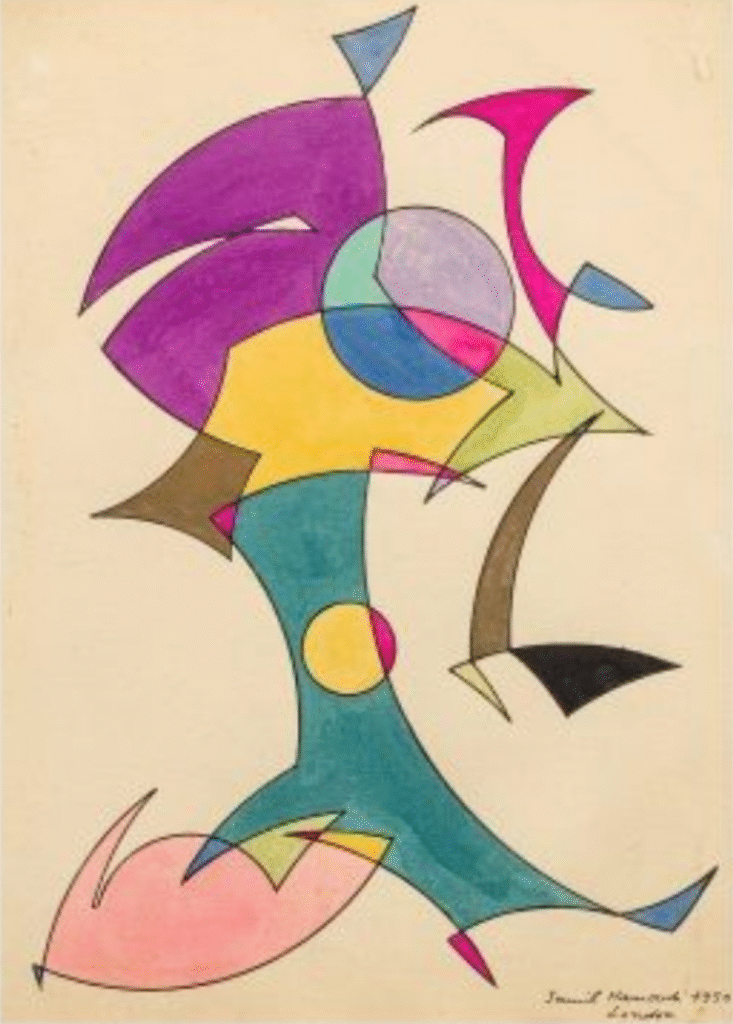
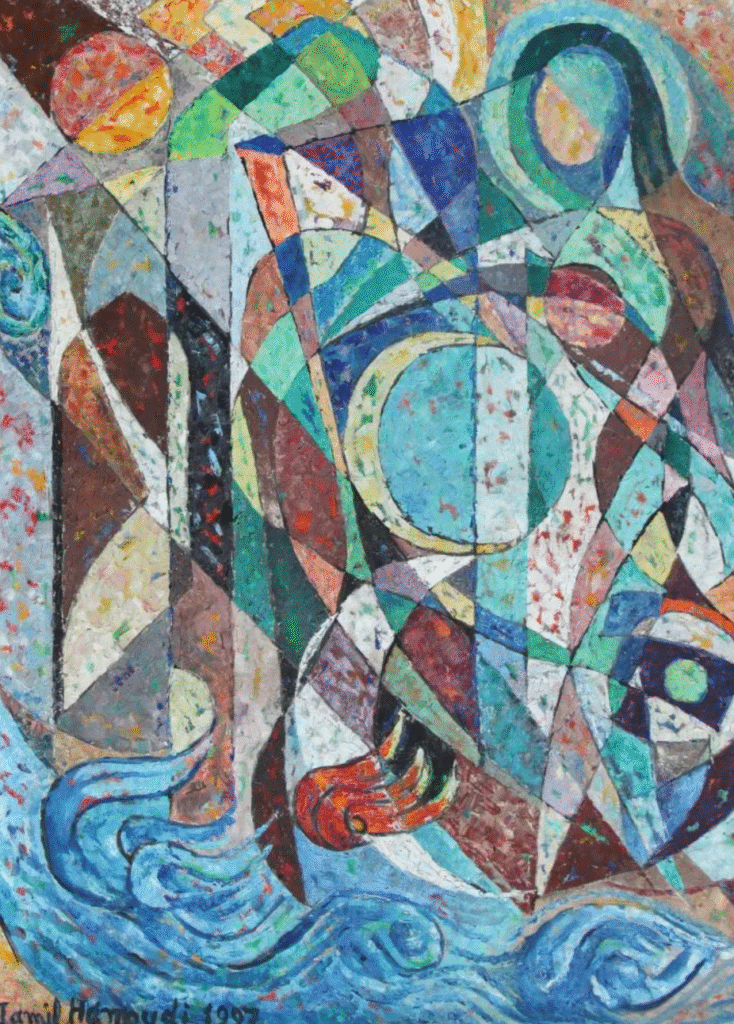
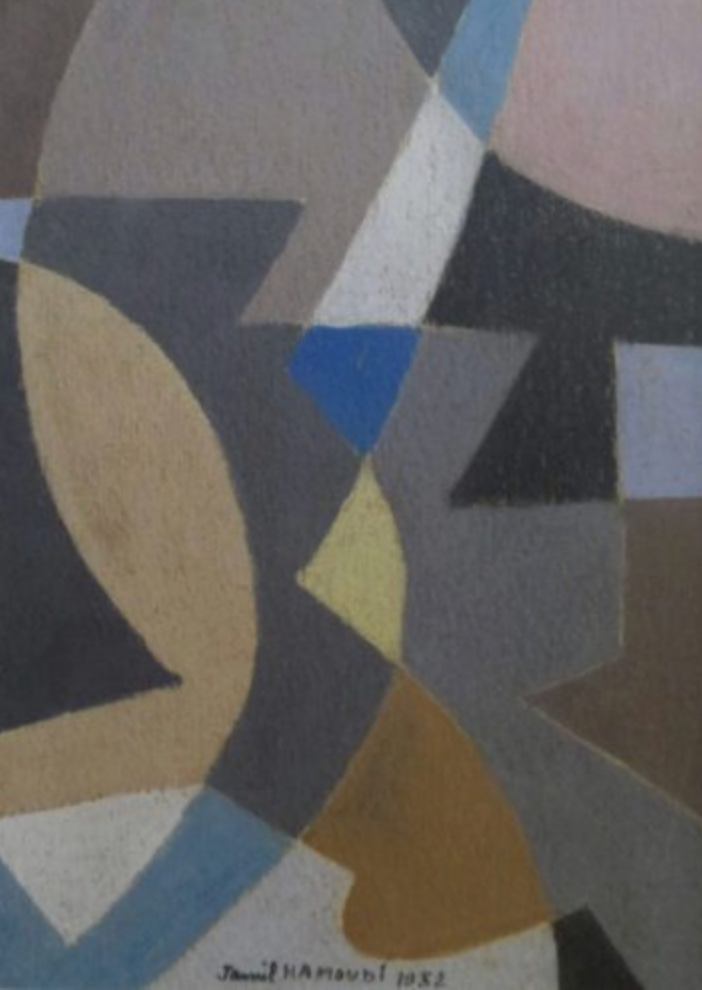
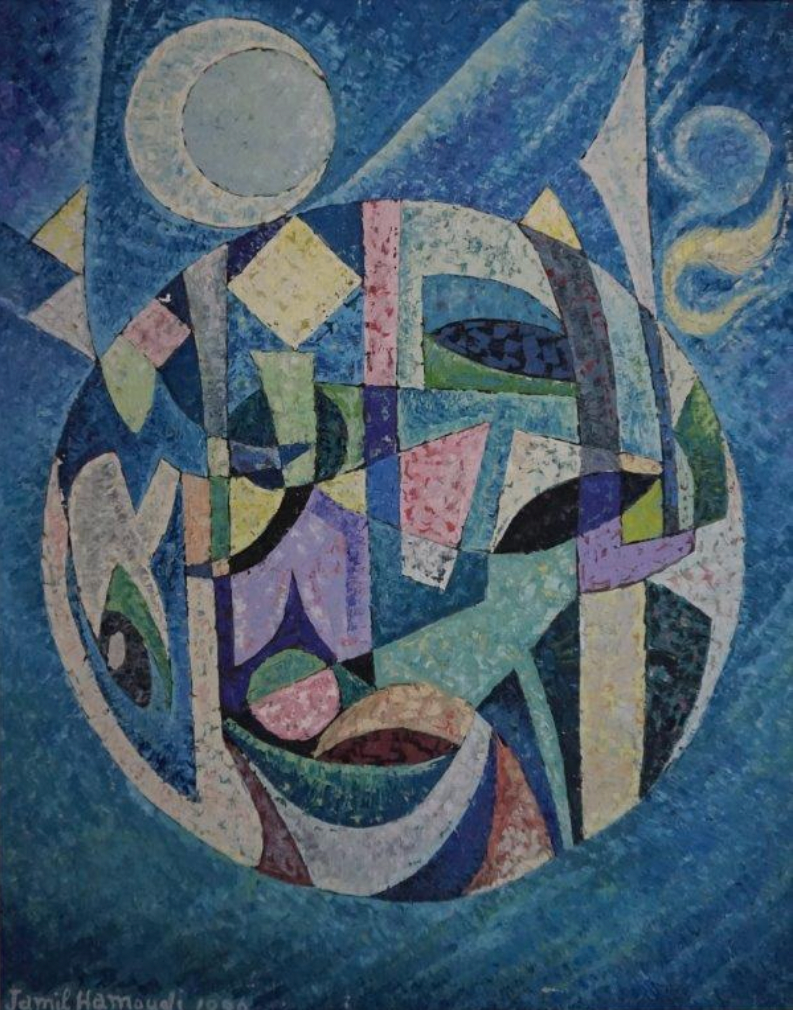
Jamil Hamoudi modernized the Arabic letter. His work laid the foundations of Hurufiyya and reshaped Iraqi modern art.
• Among the first to use the Arabic script as an abstract structure
• Built Iraqi modernism without abandoning heritage
• Influenced generations as an artist, educator, and cultural leader
Jamil Hamoudi was born in Baghdad in 1924. He began as a self-taught sculptor, learning form through direct observation. This early training in volume and structure later shaped the discipline of his paintings.
He graduated from the Institute of Fine Arts in Baghdad in 1945. At the time, Iraqi artists were searching for alternatives to academic realism. Hamoudi belonged to this generation, but his path quickly diverged.
In 1947, a government scholarship took him to Paris. He studied at the École Nationale Supérieure des Beaux-Arts, Académie Julian, and the École du Louvre. He encountered Cubism, abstraction, and modernist theory at their source. At the same time, he studied Assyrian-Babylonian art and ancient languages. These parallel interests defined his direction.
Paris clarified his position. Western abstraction offered method, not identity. Hamoudi turned to Arabic script as a structural system. From the late 1940s onward, the letter became the core of his work.
He removed language from its literary role. Letters became lines, planes, and rhythm. He repeated and fractured them. He built flat surfaces with controlled depth. His compositions relied on geometry, balance, and tension rather than decoration. This approach placed him among the earliest pioneers of the Hurufiyya movement.
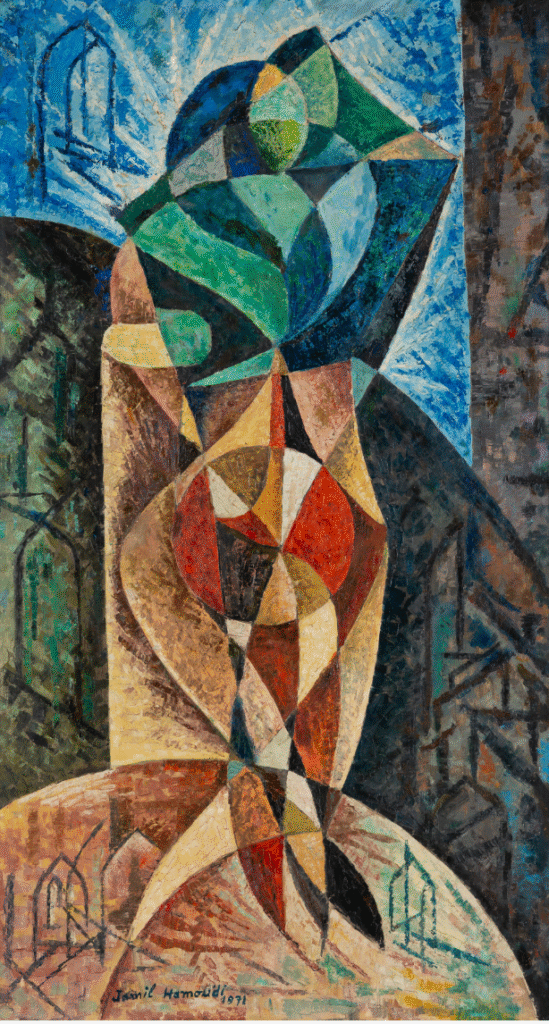
A clear example of his mature work is the painting above, “Between Heaven and Earth” (1971). The painting uses compressed space and angular forms derived from calligraphic movement. Color blocks hold the structure in place. Meaning emerges through form rather than narrative.
Hamoudi’s role extended beyond his studio. After returning to Iraq, he became an educator and critic. He later served as Director of the Fine Arts Department at the Ministry of Culture. Through teaching and institutional work, he helped define the framework of Iraqi modern art.
Historically, his work addressed a central problem of post-colonial art: how to be modern without imitation. Hurufiyya provided an answer.
Hamoudi exhibited in Baghdad and Beirut from the 1950s onward and later entered major Arab and international collections.
His works are held by institutions such as the Dalloul Art Foundation, Barjeel Art Foundation, and the Dubai Collection, as well as by private collectors across the Middle East. These holdings place him among the foundational figures of modern Arab art. His legacy rests on method rather than rhetoric. Hamoudi treated modernity as a structural problem rather than a stylistic one. By rebuilding abstraction from Arabic script and ancient visual systems, he established a modern practice grounded in history and capable of speaking beyond it.
Would you own one of his masterpieces?