

Dia Azzawi
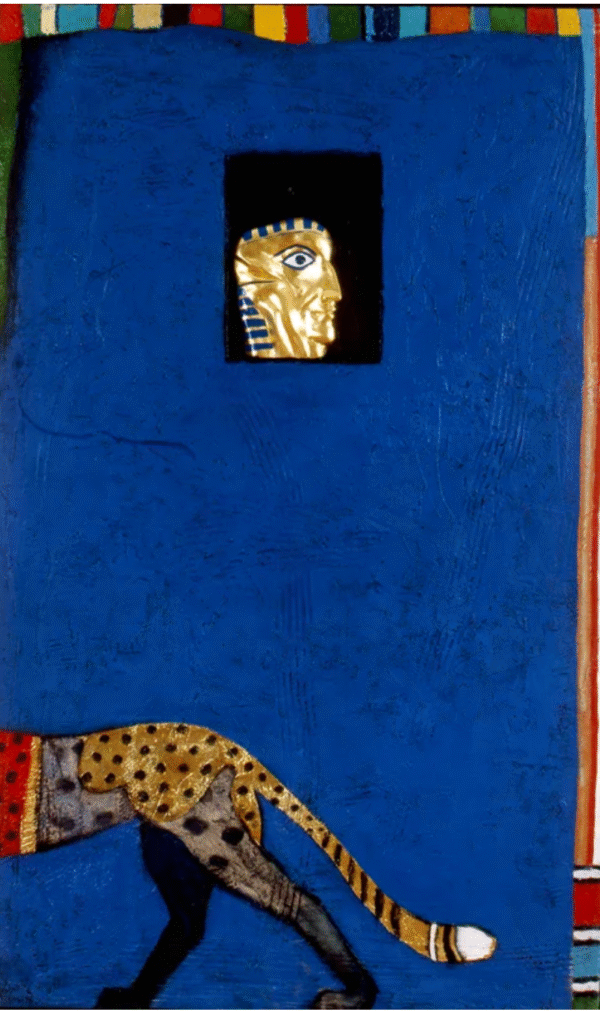
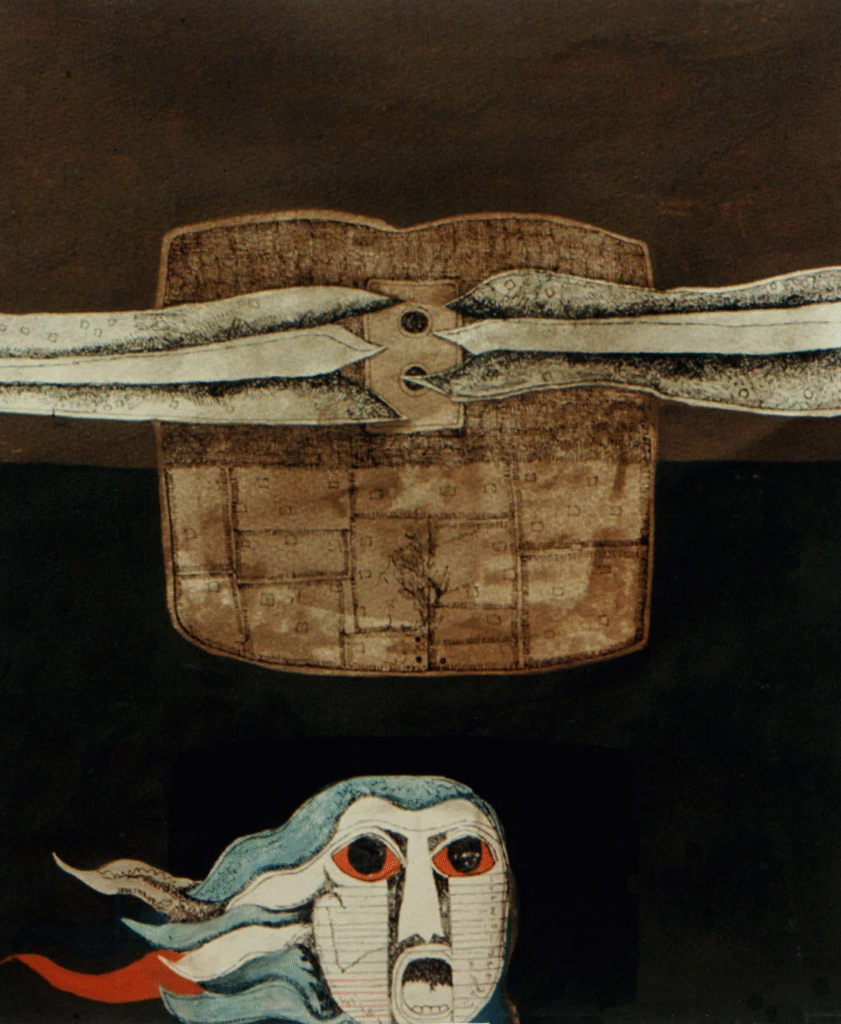
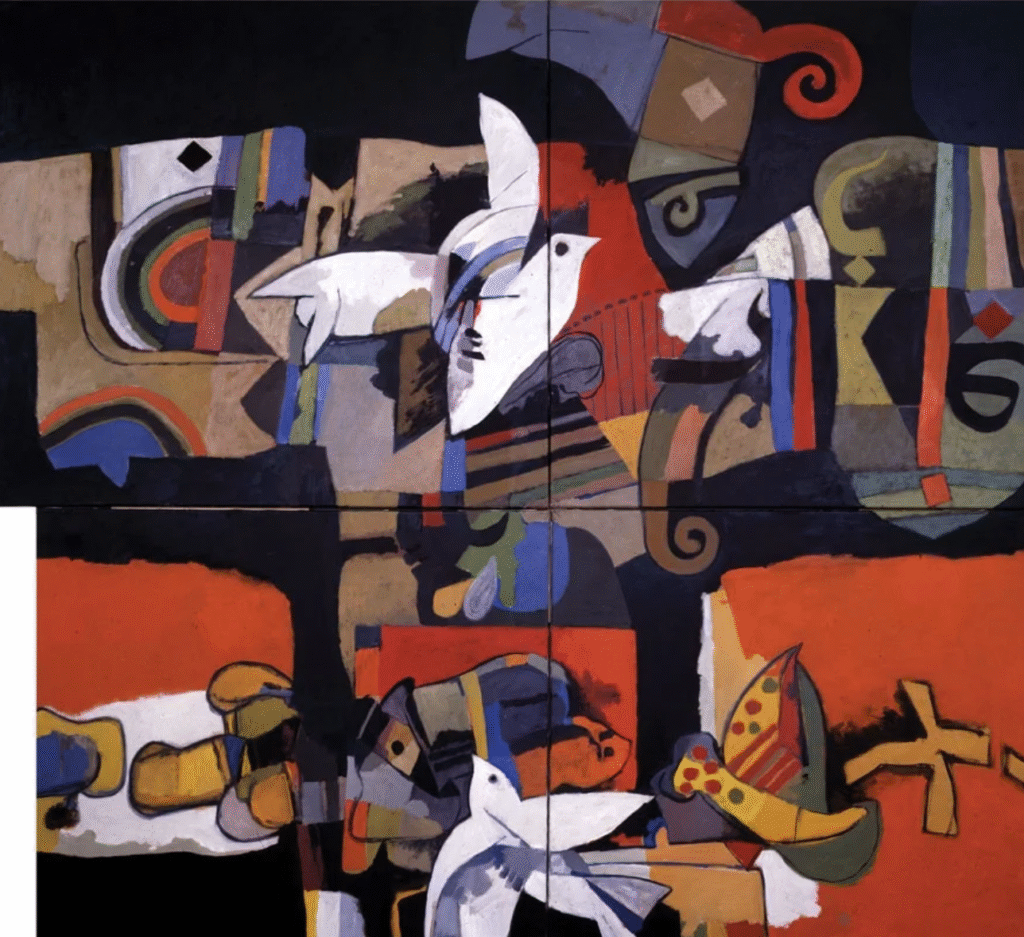
Dia Azzawi: The Architect of Arab Memory
By Rawanzo
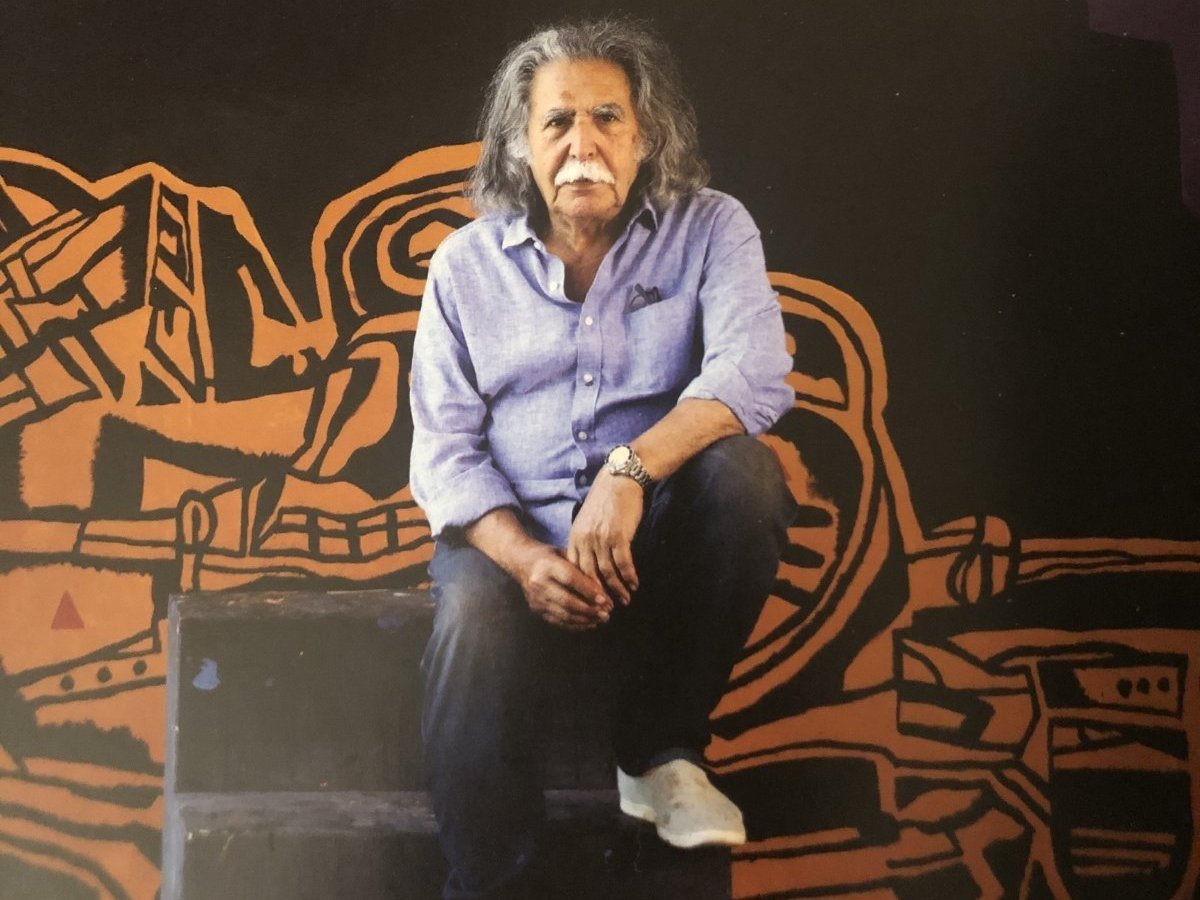
To understand Dia Azzawi is to understand the weight of memory. Born in the vibrant, labyrinthine alleys of al-Fadhil in Baghdad in 1939, Azzawi did not merely grow up in Iraq; he absorbed it. The son of a grocer in the city center, he had an early sensory landscape defined by the dust of ancient ruins, the vibrant colors of local markets, and the rhythmic cadence of Arabic poetry. Today, he stands as a towering figure of modern Arab art. A visual poet who has spent six decades weaving the fragmented history of the Middle East into monumental canvases.
Azzawi’s journey began while studying archaeology at the University of Baghdad; he simultaneously trained at the Institute of Fine Arts under the pioneering Iraqi artist Hafidh al-Droubi. This dual education became the bedrock of his identity. He was learning the classical techniques of European painting while physically unearthing the myths of Gilgamesh and the tragedies of Karbala. “This contrast meant that I was working with European principles, but at the same time, using my heritage as part of my work,” he once reflected.
In the 1960s, Azzawi became a central figure in Baghdad’s avant-garde, drafting the manifesto for the New Vision (Al-Raiyah al-Jadida) group. He championed an art that was free from rigid traditionalism yet deeply rooted in Arab identity. He embraced the Hurufiyya movement, transforming Arabic calligraphy from mere text into dynamic, abstract forms that danced across his canvases.
But the trajectory of Azzawi’s life was irrevocably altered by the region’s political turbulence. Serving as a reservist in the Iraqi army between 1966 and 1973, he witnessed the devastating human cost of conflict. In 1976, as the political climate in Iraq darkened, he chose self-imposed exile, settling in London.
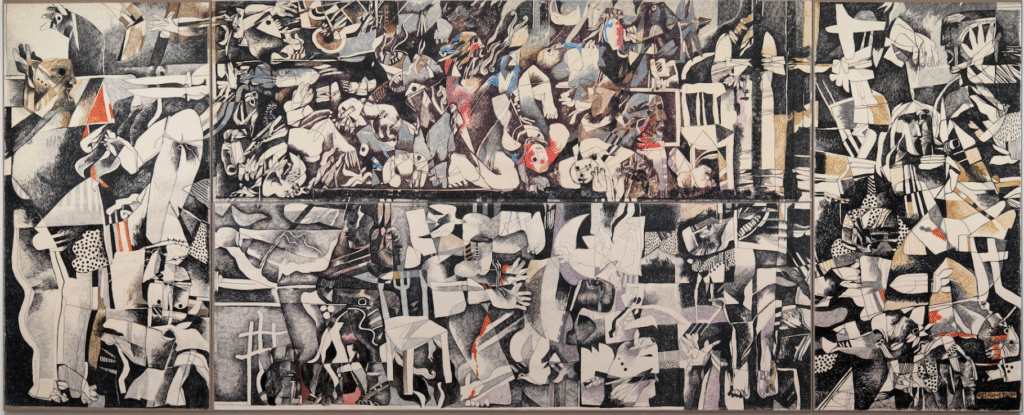
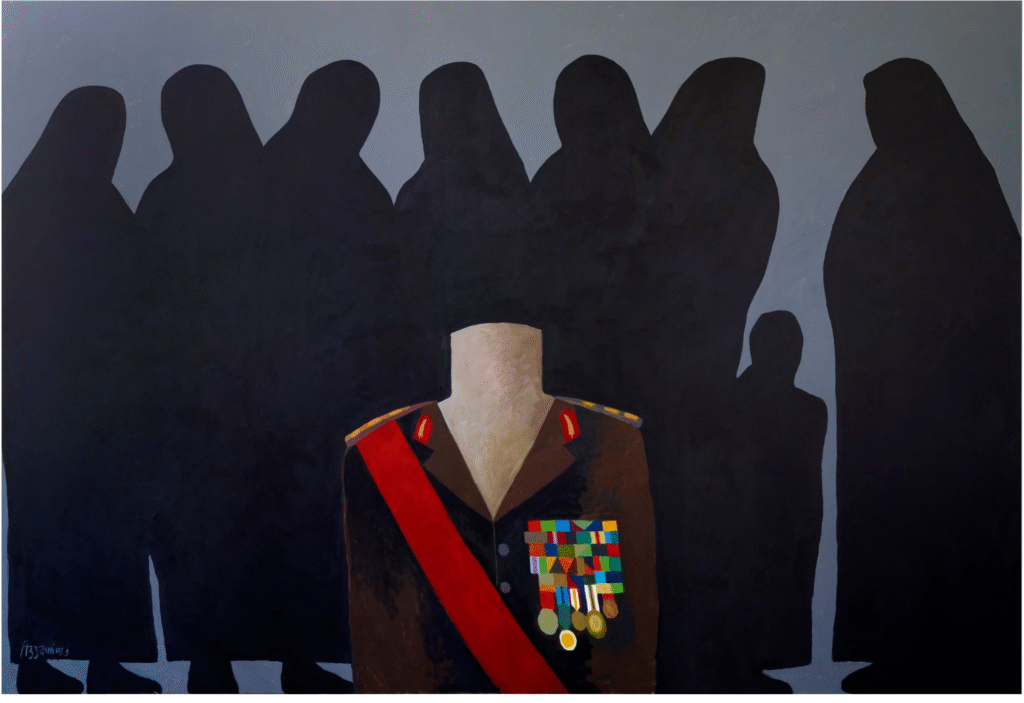
Exile did not sever his connection to his homeland; it amplified it. From his studio in London, Azzawi became the visual conscience of the Arab world. His monumental works, such as the visceral Sabra and Shatila Massacre (1982-1983) and the haunting My Broken Dream, are not merely paintings; they are acts of defiance against forgetting. He paints the pain of Palestine, the devastation of the Gulf War, and the statelessness of refugees with a palette that is both brutal and beautiful.
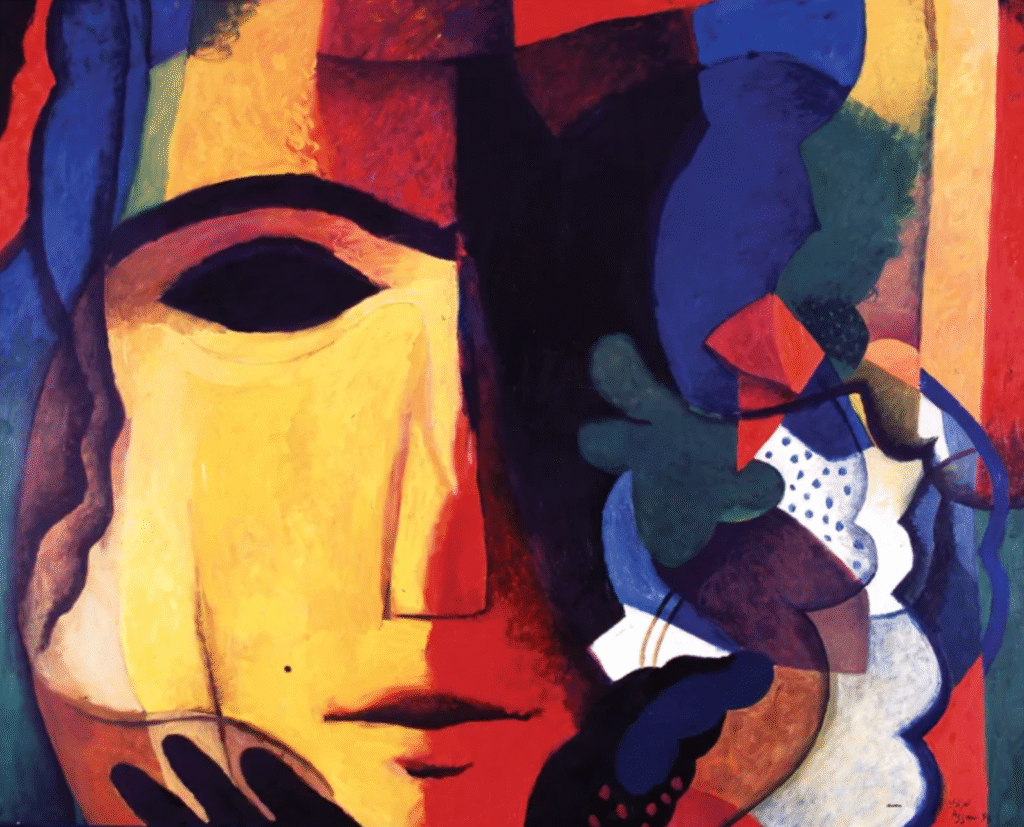
Dia Azzawi’s legacy is that of a guardian. Through his bold colors, fragmented figures, and calligraphic strokes, he ensures that the stories of the Levant and the Middle East are not erased by time or war. He paints so that we may remember.
ضياء العزاوي: مهندس الذاكرة العربية
بقلم روانزو
أن تفهم ضياء العزاوي يعني أن تفهم ثقل الذاكرة. وُلد العزاوي في أزقة حي الفضل النابضة بالحياة في بغداد عام 1939، ولم يكتفِ بالنشأة في العراق؛ بل تشربه في أعماقه. كابن لبقال في وسط المدينة، تشكل مشهده الحسي المبكر من غبار الآثار القديمة، وألوان الأسواق المحلية الزاهية، والإيقاع المنتظم للشعر العربي. اليوم، يقف كشخصية شامخة في الفن العربي الحديث—شاعر بصري أمضى ستة عقود في نسج التاريخ المجزأ للشرق الأوسط في لوحات ضخمة.
بدأت رحلة العزاوي عند تقاطع عالمين. فبينما كان يدرس علم الآثار في جامعة بغداد، كان يتدرب في الوقت نفسه في معهد الفنون الجميلة تحت إشراف الفنان العراقي الرائد حافظ الدروبي. أصبح هذا التعليم المزدوج حجر الأساس لهويته. كان يتعلم التقنيات الكلاسيكية للرسم الأوروبي بينما كان ينبش فعلياً أساطير جلجامش ومآسي كربلاء. وقد عبر عن ذلك قائلاً: “هذا التناقض يعني أنني كنت أعمل بمبادئ أوروبية، ولكن في الوقت نفسه، أستخدم تراثي كجزء من عملي”.
فنه ليس حنيناً للماضي، بل هو حوار ملح وعنيف مع الحاضر. في الستينيات، أصبح العزاوي شخصية مركزية في الطليعة الفنية في بغداد، حيث صاغ البيان التأسيسي لجماعة “الرؤية الجديدة”. دافع عن فن متحرر من التقاليد الجامدة ولكنه متجذر بعمق في الهوية العربية. تبنى حركة “الحروفية”، محولاً الخط العربي من مجرد نص إلى أشكال تجريدية ديناميكية تتراقص على لوحاته.
لكن مسار حياة العزاوي—وفنه—تغير بشكل لا رجعة فيه بسبب الاضطرابات السياسية في المنطقة. خلال خدمته كجندي احتياط في الجيش العراقي بين عامي 1966 و1973، شهد التكلفة البشرية المدمرة للصراع. وفي عام 1976، مع قتامة المناخ السياسي في العراق، اختار المنفى الاختياري واستقر في لندن.
لم يقطع المنفى صلته بوطنه؛ بل ضاعفها. من مرسمه في لندن، أصبح العزاوي الضمير البصري للعالم العربي. أعماله الضخمة، مثل لوحة “مجزرة صبرا وشاتيلا” (1982-1983) العميقة التأثير ولوحة “حلمي المحطم” المروعة، ليست مجرد رسومات؛ إنها أفعال تحدٍ ضد النسيان. إنه يرسم ألم فلسطين، ودمار حرب الخليج، وانعدام جنسية اللاجئين بلوحة ألوان قاسية وجميلة في آن واحد.
إرث ضياء العزاوي هو إرث الحارس. من خلال ألوانه الجريئة، وشخصياته المجزأة، وضرباته الخطية، يضمن ألا تُمحى قصص المشرق والشرق الأوسط بفعل الزمن أو الحرب. إنه يرسم لكي نتذكر
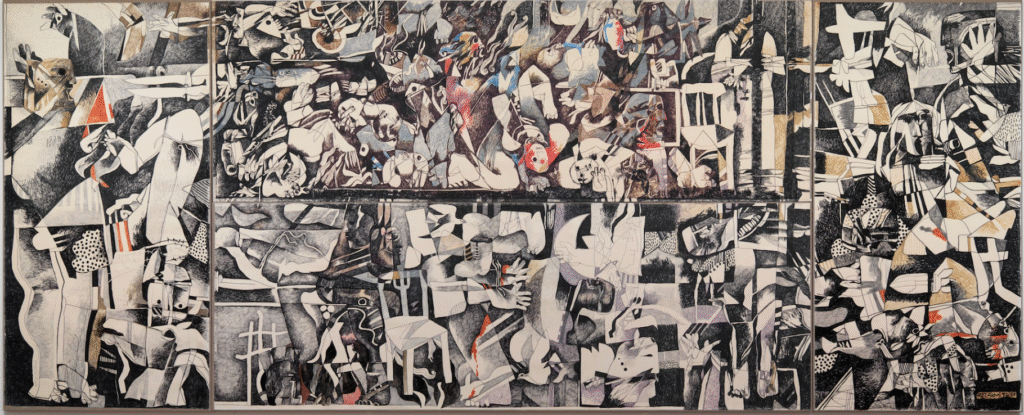
Sabra and Shatila Massacre (1982-1983): A Visual Autopsy of Grief
When news of the Sabra and Shatila massacre reached London in September 1982, Dia Azzawi did not immediately paint. He read. Specifically, he read Jean Genet’s harrowing dispatch, Quatre heures à Chatila (Four Hours in Shatila), which detailed the slaughter of nearly 3,000 Palestinian refugees and Lebanese civilians over three days. The text was visceral, graphic, and suffocating. Azzawi’s response was to translate that suffocation into visual form.
The resulting work, Sabra and Shatila Massacre (1982-1983), now in the collection of the Tate Modern, is an epic mural-sized drawing measuring 3 meters high by 7.5 meters wide. Executed in ink and wax crayon on paper mounted on canvas, it is widely considered the “Guernica of the Arab world”. But where Picasso’s masterpiece relies on a sweeping, theatrical dynamism, Azzawi’s work is oppressively claustrophobic.
The Architecture of Chaos
Azzawi structured the monumental piece across four large panels. The composition has no central focal point, no horizon line, and no escape route for the eye. It mimics the narrow, inescapable alleys of the Shatila camp itself.
He employs a Cubist fragmentation, but not to convey movement. Instead, the geometric breaking of forms serves as a system of measure a way to count out cyclical disaster. The canvas is densely packed with a frenetic explosion of obliterated human figures, domestic remnants, and instruments of war. A boot, two chairs, a plane, a missile marked “USA”, and barbed wire are interspersed with dismembered bodies.
The Color of Death
Azzawi deliberately abandoned his usually vibrant palette. The drawing is dominated by monochromatic tones of black, white, and gray, punctuated only by sudden, violent touches of brown and blood red .
Perhaps the most chilling aspect of the work is its use of negative space. In traditional composition, areas of white offer visual relief. In the Sabra and Shatila Massacre, the white spaces ignite horror, as the eye adjusts, these blank voids reveal themselves to be corpses. The figures merge with the background, emphasizing the flatness of the picture and the inescapable reality of the slaughter.
To the right and left of the chaotic center stand two upright figures—gods of war flanking a netherworld that has already claimed its victims. It is a relentless indictment, what Azzawi himself called “a manifesto of dismay and anger”. It is a scream woven into paper, a refusal to let silence erase the victims.
مجزرة صبرا وشاتيلا (1982-1983): تشريح بصري للحزن
عندما وصلت أنباء مجزرة صبرا وشاتيلا إلى لندن في أيلول/سبتمبر 1982، لم يبدأ ضياء العزاوي بالرسم فوراً. بل بدأ بالقراءة. وتحديداً، قرأ التقرير المروع للكاتب الفرنسي جان جينيه “أربع ساعات في شاتيلا”، والذي فصّل فيه مذبحة ما يقرب من 3000 لاجئ فلسطيني ومدني لبناني على مدار ثلاثة أيام. كان النص قاسياً، دموياً، وخانقاً. فكان رد العزاوي هو ترجمة هذا الاختناق إلى شكل بصري.
العمل الناتج، “مجزرة صبرا وشاتيلا” (1982-1983)، والموجود الآن في مجموعة متحف تيت مودرن، هو رسم جداري ملحمي يبلغ ارتفاعه 3 أمتار وعرضه 7.5 أمتار . نُفذ العمل باستخدام الحبر وألوان الشمع على ورق مثبت على قماش، ويُعتبر على نطاق واسع “غرنيكا العالم العربي” . ولكن في حين تعتمد تحفة بيكاسو على ديناميكية مسرحية واسعة، فإن عمل العزاوي خانق ومغلق بشكل قمعي.
هندسة الفوضى
هيكل العزاوي هذا العمل الضخم عبر أربع لوحات كبيرة. لا يحتوي التكوين على نقطة تركيز مركزية، ولا خط أفق، ولا طريق هروب للعين. إنه يحاكي الأزقة الضيقة التي لا مفر منها في مخيم شاتيلا نفسه .
يستخدم العزاوي التجزئة التكعيبية، ولكن ليس للتعبير عن الحركة. بدلاً من ذلك، يعمل التكسير الهندسي للأشكال كنظام قياس—طريقة لإحصاء الكارثة الدورية . تزدحم اللوحة بانفجار محموم لشخصيات بشرية ممحاة، وبقايا منزلية، وأدوات حرب. حذاء، كرسيان، طائرة، صاروخ يحمل علامة “USA”، وأسلاك شائكة تتخلل أجساداً مقطعة الأوصال .
لون الموت
تخلى العزاوي عمداً عن لوحة ألوانه النابضة بالحياة المعتادة. تهيمن على الرسم نغمات أحادية اللون من الأسود والأبيض والرمادي، تتخللها فقط لمسات مفاجئة وعنيفة من البني والأحمر الدموي .
لعل الجانب الأكثر رعباً في العمل هو استخدامه للمساحات السلبية. في التكوين التقليدي، توفر المساحات البيضاء راحة بصرية. أما في “مجزرة صبرا وشاتيلا”، فإن المساحات البيضاء تشعل الرعب—فبينما تتكيف العين، تكشف هذه الفراغات الفارغة عن نفسها كجثث . تندمج الأشكال مع الخلفية، مما يؤكد على تسطح الصورة والواقع الذي لا مفر منه للمذبحة .
إلى يمين ويسار المركز الفوضوي يقف شكلان منتصبان—آلهة حرب تحيط بعالم سفلي حصد ضحاياه بالفعل . إنه اتهام لا هوادة فيه، وهو ما أسماه العزاوي نفسه “بيان فزع وغضب” . إنها صرخة منسوجة في الورق، ورفض للسماح للصمت بمحو الضحايا.