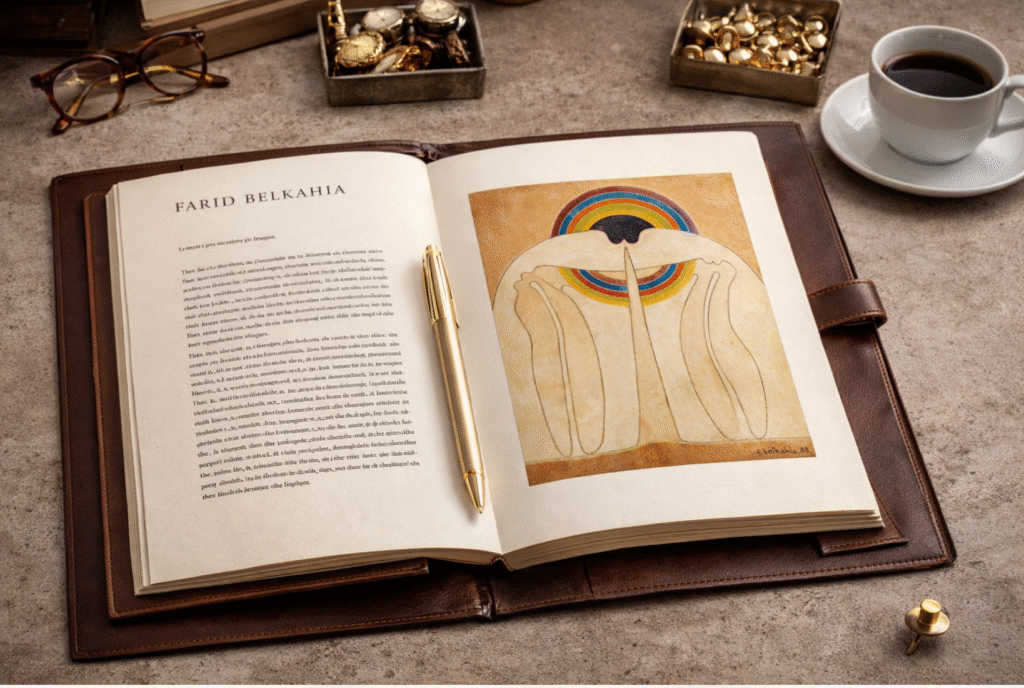

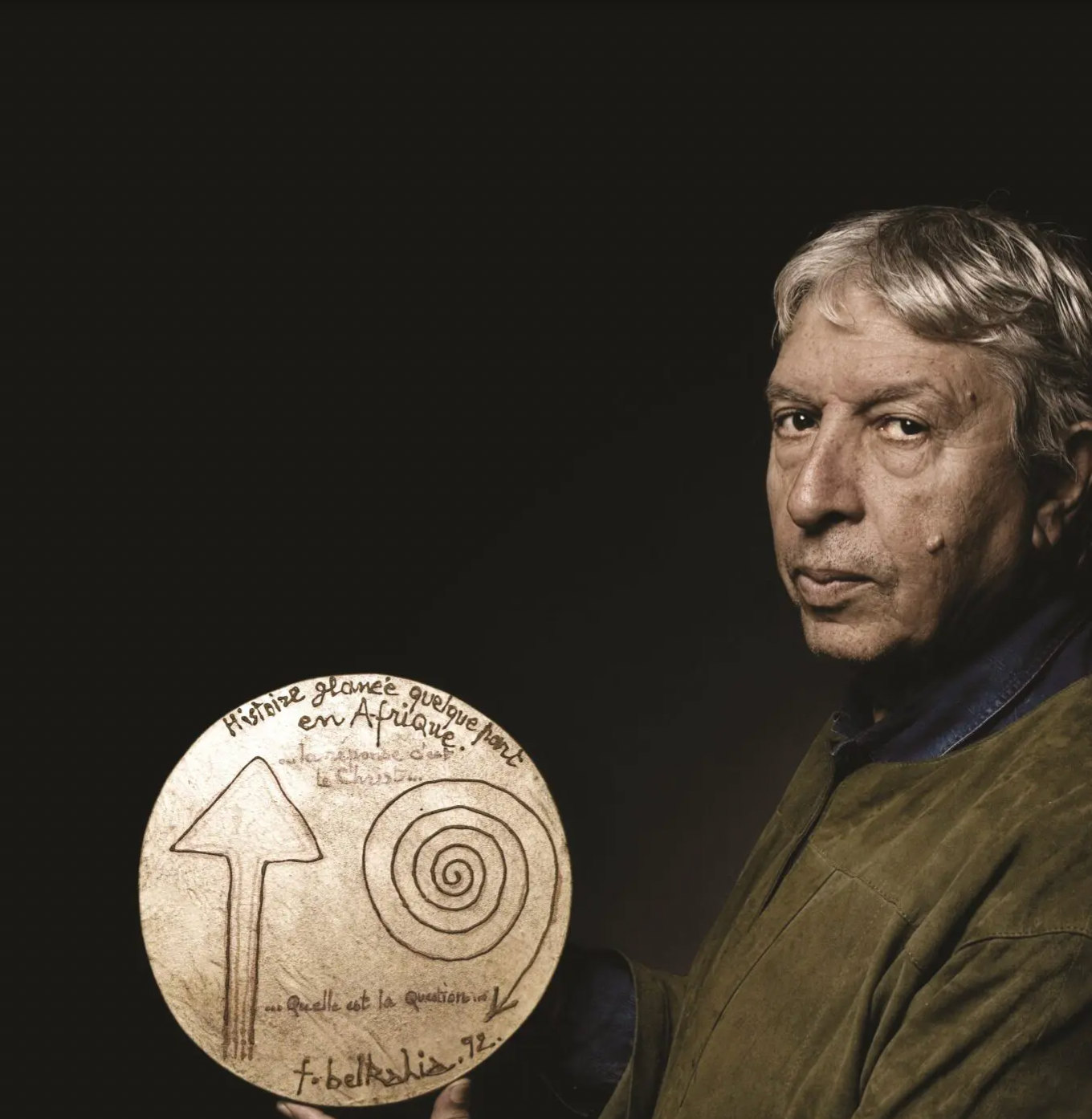
Farid Belkahia
Material, surface, and the refusal of imitation
• A central figure of the Casablanca School
• Replaced canvas with copper, skin, and natural pigments
• Redefined modernity through indigenous form and method
Farid Belkahia was born in Marrakech in 1934, during the French Protectorate. He grew up in a city where craft, ritual, and material knowledge shaped daily life. These early surroundings later became central to his artistic decisions.
In the 1950s, Belkahia studied painting at the École des Beaux-Arts in Paris. He later trained in stage design in Prague. These years provided technical exposure to European modernism, abstraction, and theatrical composition. They also revealed the limits of imported models. By the time he returned to Morocco in 1962, the country had gained independence. The question of cultural direction was immediate.
Belkahia rejected the academic hierarchy that placed Western abstraction at the center. He accepted the directorship of the École des Beaux-Arts in Casablanca and transformed its curriculum. Teaching shifted toward anthropology, local craft, architecture, and visual heritage. This reform became the foundation of what is now known as the Casablanca School.
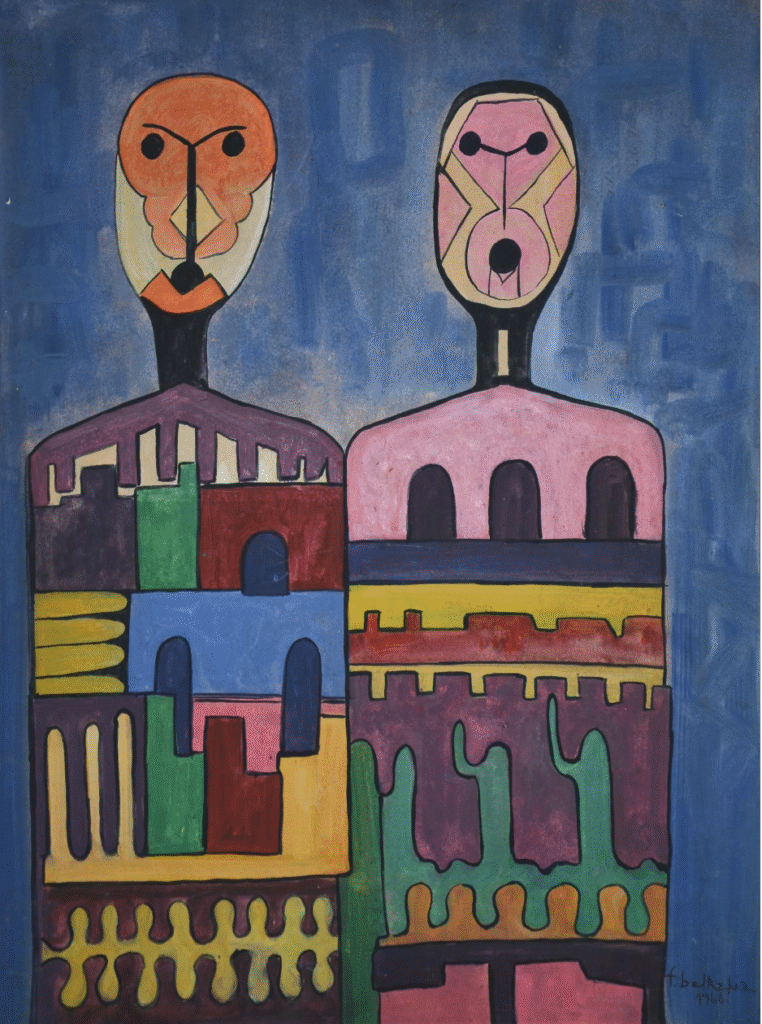
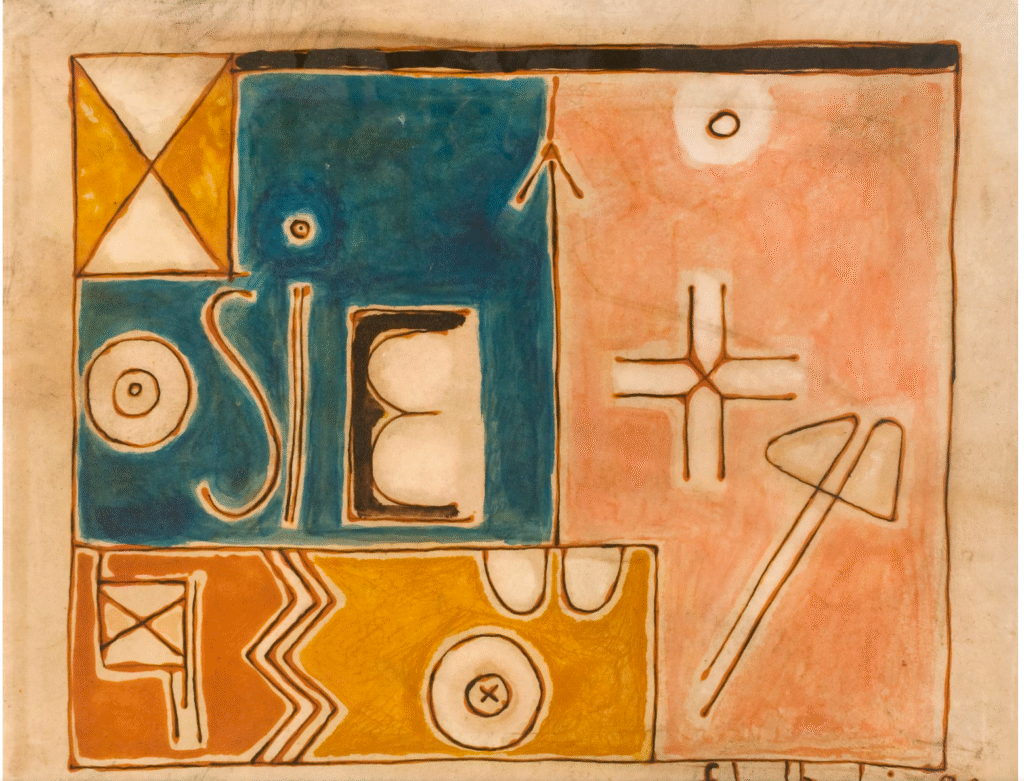
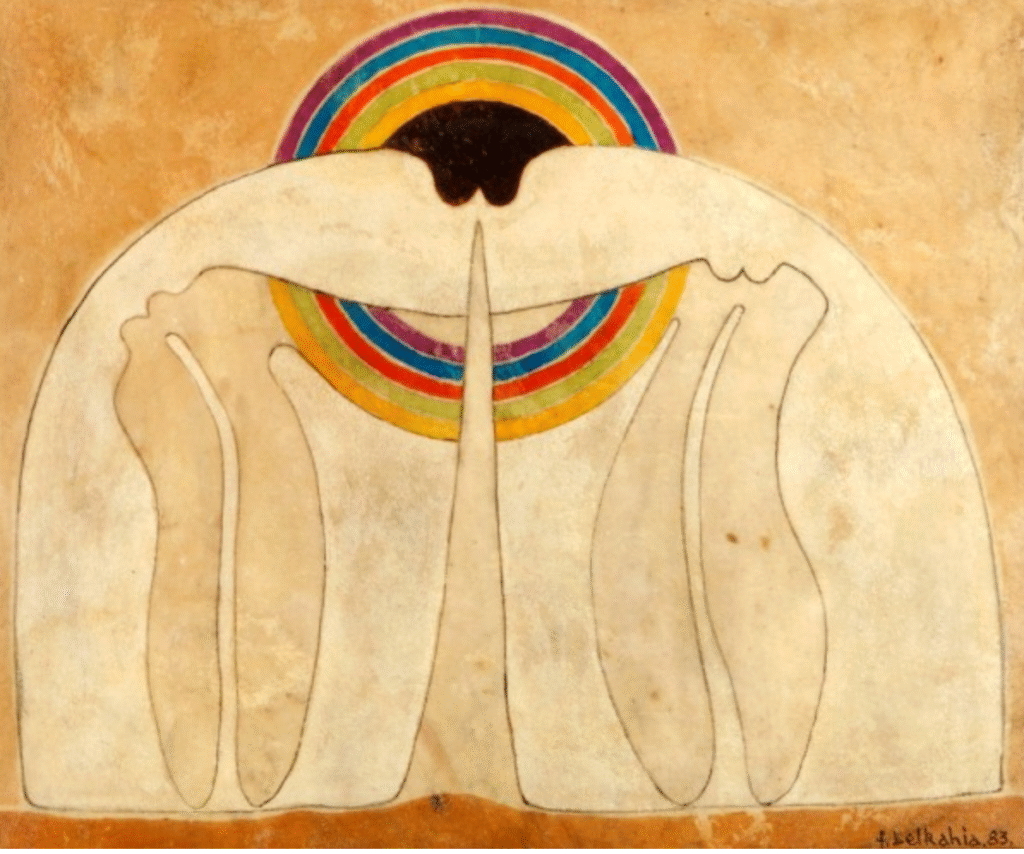
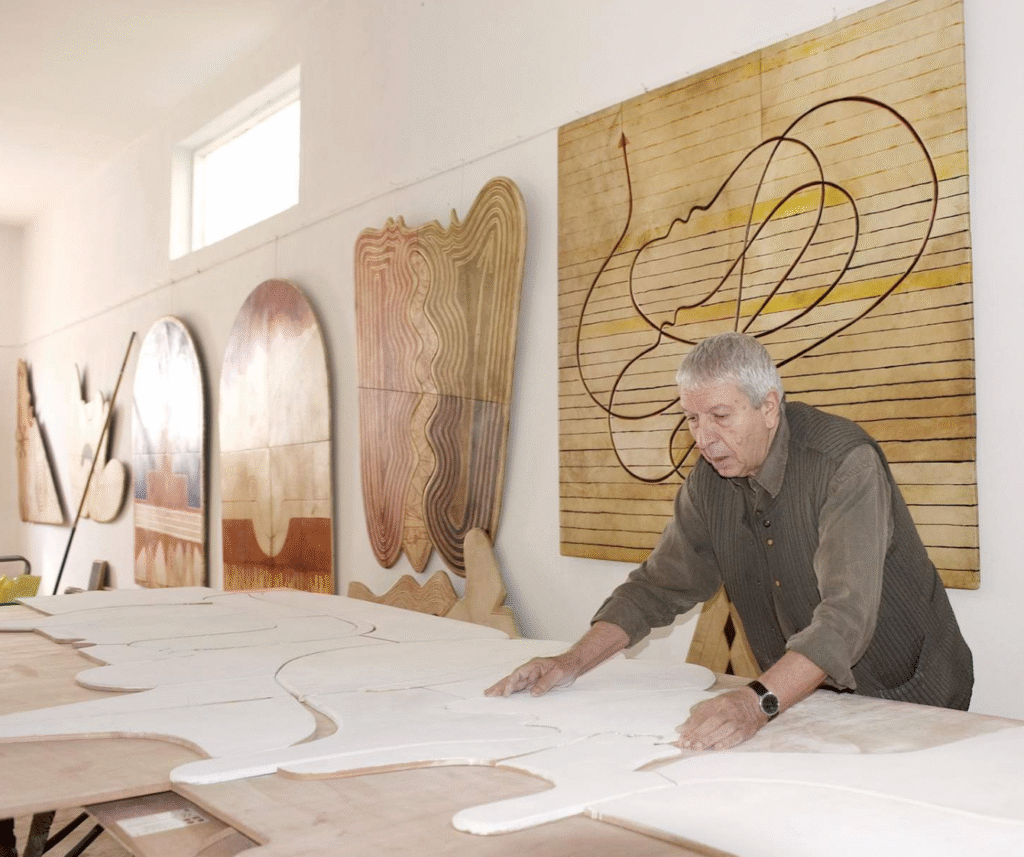
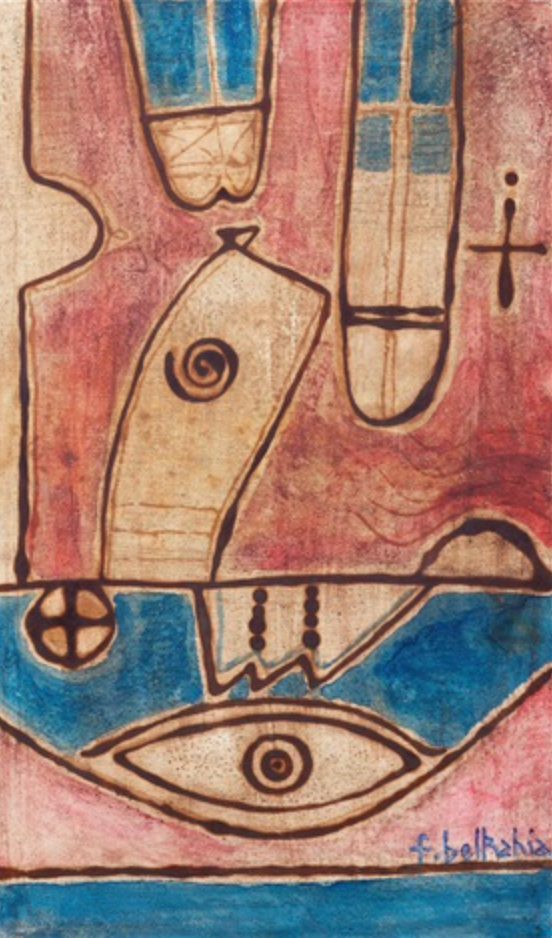
His studio practice followed the same logic. Belkahia abandoned canvas and oil paint. He worked with copper, treated animal skin, and natural pigments such as henna and pomegranate bark. These materials carried history, labor, and place. They also imposed discipline. Form became deliberate. Gesture became controlled.
A key example is Aube (Dawn) (1968). The work combines burnished copper with layered, dyed skin. Incised lines form geometric signs derived from Amazigh visual systems without literal transcription. The surface holds tension between rigidity and organic movement. The work does not illustrate identity. It constructs it through material and structure.
Belkahia’s abstraction was never decorative. Symbols appear reduced and restrained. Geometry replaces narrative. His compositions refer to cycles, body, land, and time without reliance on figuration. This approach positioned Moroccan heritage as a source of modern reference.
Beyond his own work, through exhibitions, publications, and teaching, he shaped a generation of artists, including Mohamed Melehi and Mohamed Chabâa. Together, they argued for a modernism emerging from the Maghreb rather than applied to it.
Belkahia exhibited internationally from the 1960s onward. His work was included in major exhibitions such as Magiciens de la Terre (1989) and Africa Remix (2005). Today, his works are held by institutions including the Fondation Farid Belkahia, Mathaf, Barjeel Art Foundation, and Dalloul Art Foundation.