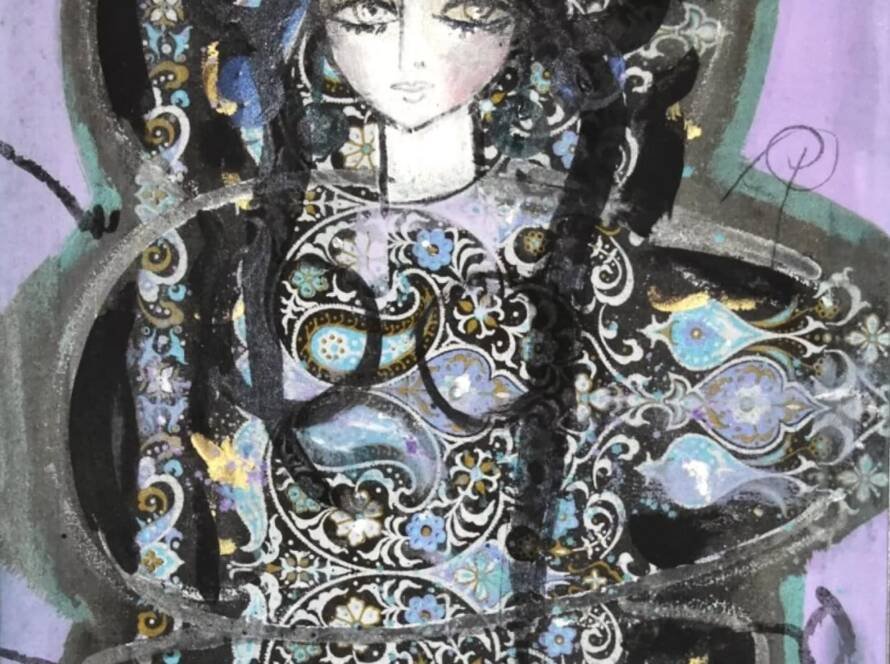

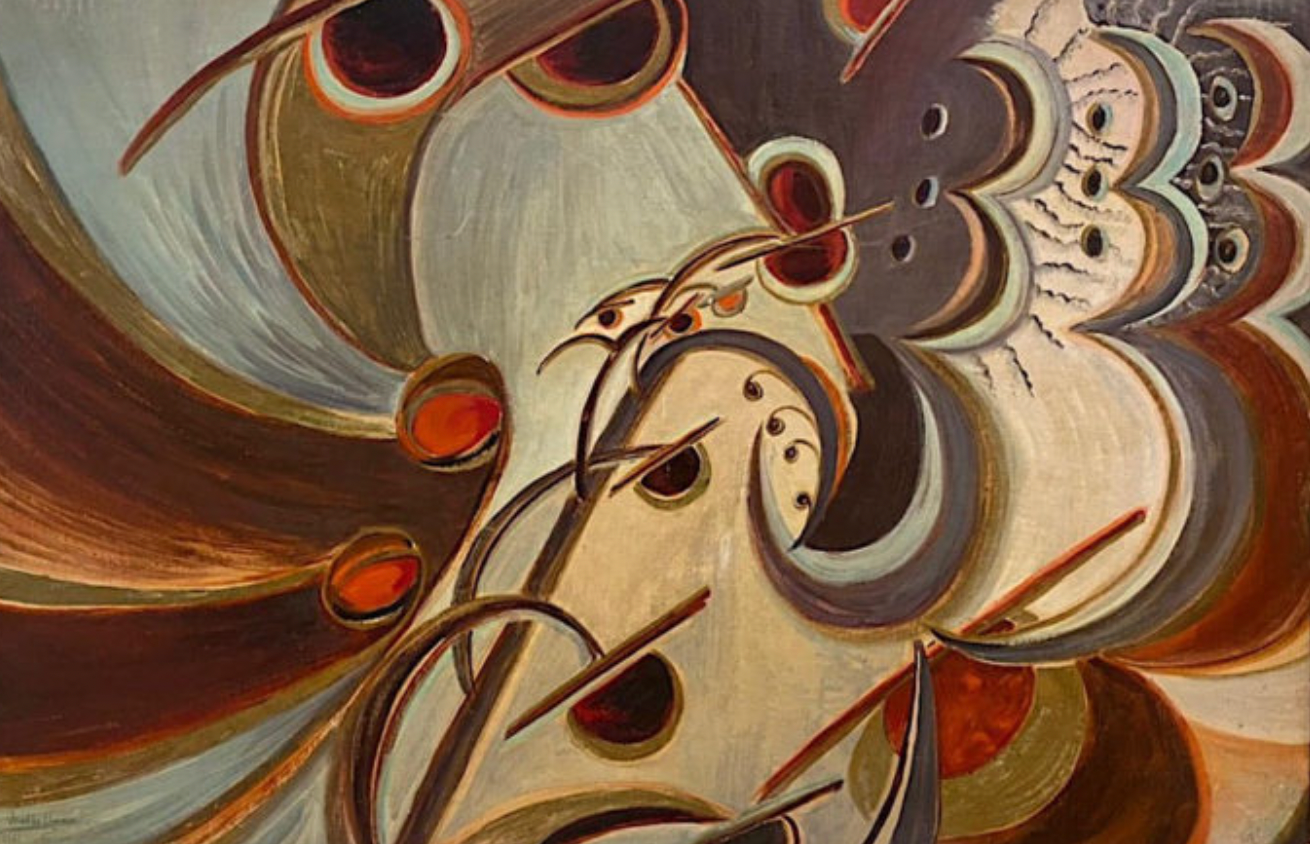
The word Hurufiyya comes from huruf ! The Arabic word for letters.
Artists adopted this name in the mid-20th century to signal something clear:
They were building a new modern language rooted in the structure of the Arabic letter itself.
Hurufiyya emerged as Arab artists sought a modern visual identity that did not depend on European styles. Western modernism dominated art schools and museums, yet imitation felt limiting. They needed a form that was native, flexible, and capable of abstraction.
The Arabic letter became their answer because of its internal intelligence. A single letter carries proportion, angle, rhythm, and curve ! a ready-made unit of design. It could be expanded, reduced, abstracted, or reassembled. It held enough structure to remain itself, and enough flexibility to become something new.
Hurufiyya didn’t originate with a single founder or country. It appeared almost simultaneously in studios and schools across Baghdad, Khartoum, and Casablanca. In the 1940s, Madiha Omar began treating letters as geometric shapes, positioning them inside modern compositions. A decade later, Jamil Hamoudi in Paris explored similar ideas, using letter-like forms as graphic anchors in his work. In the 1960s, Shakir Hassan Al Said provided the most articulate intellectual framework, arguing that the letter could be a modern symbol !
Across the region, the movement took on different accents. In Sudan, artists blended the letter with African forms and materials, creating a visual bridge between identities. In Morocco, the letter entered colour fields, patterns, and surface treatments influenced by Amazigh and local artistic traditions. In Tunisia, Nja Mahdaoui detached the letter from its meaning entirely, turning it into a pure kinetic pattern, closer to choreography than to writing.
Despite their differences, Hurufiyya artists shared a quiet agreement: modernity did not require abandoning cultural foundations. It is continuity without repetition. It proved that modern art from the Arab world could be built on its own structures, not borrowed ones. Today, when contemporary artists return to the letter, breaking it apart, stretching it, hiding it, or exposing it, they are not repeating the past. They are extending the same conversation: How do we create a visual language that is contemporary, confident, and unmistakably ours?
Hurufiyya mattered because it demonstrated that innovation and identity do not sit on opposite sides of a line. Sometimes, the most modern step begins with something as simple as a single letter, a letter familiar to you.